In what must've been the largest Rick Roll ever, The Cartoon Network went and Rick Rolled the entire Macy's Parade audience. Now may be the time to retire the Rick Roll for good.
bxAv110
bxAv110
bxAv110
Saturday, November 29, 2008


Thursday, November 27, 2008
Monday, November 17, 2008
'The General' vs. 'The General'
Update: A few special features were left out of the "only on MK2" section. They're all there now.
I sit in on DVDTalk's Silent DVD column this week with a review of Kino's new edition of Buster Keaton's "The General." This edition aims to become the quintessential release, with a new HD transfer from the original camera negative and three different accompaniment tracks including a new 5.1 version of the beloved Carl Davis score from Keven Brownlow's Thames Silents TV broadcast.
Being the parade-rainer I am, I was compelled to point out that the French company MK2 also did an HD transfer of the film back in 2004, and spent more time on frame-by-frame cleanup, whereas the Kino edition shows the (relatively light) wear and decay of the source material. Now, some silent film aficionados believe that transfers shouldn't be overly repaired, but simply capture the surviving documents. I'm of the opinion that, for a home presentation like this, if you can make the film look as close to how it looked when Keaton premiered it, then that's the way to go. Anyway, read the review, which has a lot more on the film beyond PQ nitpicking. And if you're thinking about going PAL region 2 for the MK2 (I recommend the UK Cinema Club release), here's a comparison of the two editions.
Transfers
KINO: Color-tinted HD transfer — Some of Keaton's compositions are particularly gorgeous in sepia tone, but I'm still partial to black-and-white, mainly when it comes to the blue nighttime scenes. Great detail and crisp image.
MK2: Black-and-white HD transfer — Brilliant image, free of the scratches and decay on most silent prints. Would be extremely difficult to top.
BOTH EDITIONS feature high-definition transfers, but neither companies will give us the film on a damn HD format. At least put it on iTunes, for crying out loud!
Scores
KINO: Carl Davis score performed by Thames Silent Orchestra (5.1 and stereo), Organ score by Lee Irwin — Davis's score is involving, exciting, and sounds great. Irwin's score is a nice bonus.
MK2: Joe Hisaishi score performed by Tokyo City Philharmonic Orchestra (5.1) — Hisaishi's beautiful score features some inspired moments, although at certain times is a bit detached from the film.
BOTH EDITIONS: The Robert Israel score that's on, like, every edition of "The General" ever (not really, but this one's been around for a while, and is featured on Kino's previous edition).
Special Features
BOTH EDITIONS:
Filmed introduction by Orson Welles — The great Welles offers an introduction that's at times insightful and astute, and always comedically Wellesian. Clips from "Coney Island" and "Cops" illustrate Keaton's development. (The Kino version maintains the old TV titles and credits for "The Silent Years: From the Collection of Paul Killiam," while the MK2 version doesn't.) (12:00)
Behind-the-scenes home movie footage (called "Filming the General" on MK2) — an interesting minute's worth of behind-the-scenes footage. Neither company makes an effort to add context via editing or voiceover.
(1:00)
MK2 Only:
"The Railroader" (actually "The Railrodder") — This 25-minute Canadian promotional short from 1965 is known as one of Keaton's most Keatonesque works from his later life. It and the documentary of its making (see below) give the MK2 release the upper hand, unless you already own them.
"Buster Keaton Rides Again" An excellent chronicle of the making of "The Railrodder." The film offers rare insight into Keaton's creative process, as well as a somewhat inaccurate history of his career. A great look at the man behind the stone face. (55:00)
Introduction by David Robinson — Robinson provides a nice overview of the film and its history, illustrated by clips and stills.
(5:00)
Featurette on movie restoration — The usual shots of original physical prints, the side-by-side comparisons, etc. (2:00)
Featurette on recording the 2004 score — This one is not subtitled in English, and features mainly footage of the recording process before some chanteuse shows up to sing a song about Johnny Gray to one of Hisaishi's themes.
(8:00)
Footage from the tinted version — In case you haven't seen it elsewhere, footage from the old transfer. (7:00)
Keaton filmography — Stills and clips from Keaton's Silent features. (11:00)
"The Return of The General" — 1962 publicity film documentary by the Louisville & Tennessee Railroad showcases the restored engine, which is featured in the present day on the Kino edition.
(11:00)
The trailer for "The Great Locomotive Chase" — Disney brought the same story that inspired "The General to the screen in 1956
"The Iron Mule" — This 1925 Al St. John silent two-reeler features the replica of the small, absurd train The Rocket that Keaton used in "Our Hospitality." The film (and its title) reference John Ford's "The Iron Horse" from the previous year. Keaton also appears, uncredited, as an Indian. (13:00)
"Alice's Tin Pony" — From Walt Disney's "Alice in Cartoonland" series, which combined animation with live-action photography, this 1925 short was also inspired by "The Iron Horse." (6:00)
Cinema Club distributed MK2's edition in the UK and includes a nice 24-page booklet with details on the film and the features, including the text of David Robinson's introduction. I understand that the French edition includes nice literature too—si tu parles français, naturellement!
KINO ONLY:
If you already own "The Railrodder" and "Buster Keaton Rides Again," Kino might have the edge.
Filmed introduction by Gloria Swanson — This clip from TV's "Silents Please" is amusing in a campy sort of way. (2:13)
A video tour of the authentic General, presented in association with the Southern Museum — See the General, learn its history and how it operates. (18:00)
A tour of the filming locations, presented by John Bengston, author of Silent Echoes — Bengston's detective work is always impressive. (4:30)
"The Buster Express" — Kino describes this as "A brisk montage of train gags from throughout Keaton's career," and that about sums it up. It's a fun, free-association montage, but certainly not essential. (5:45)
Finally, the disc features a gallery of promotional photos, lobby cards from various countries and production stills, including some from a sequence deleted from the film.
bxAv110
bxAv110
bxAv110
I sit in on DVDTalk's Silent DVD column this week with a review of Kino's new edition of Buster Keaton's "The General." This edition aims to become the quintessential release, with a new HD transfer from the original camera negative and three different accompaniment tracks including a new 5.1 version of the beloved Carl Davis score from Keven Brownlow's Thames Silents TV broadcast.
Being the parade-rainer I am, I was compelled to point out that the French company MK2 also did an HD transfer of the film back in 2004, and spent more time on frame-by-frame cleanup, whereas the Kino edition shows the (relatively light) wear and decay of the source material. Now, some silent film aficionados believe that transfers shouldn't be overly repaired, but simply capture the surviving documents. I'm of the opinion that, for a home presentation like this, if you can make the film look as close to how it looked when Keaton premiered it, then that's the way to go. Anyway, read the review, which has a lot more on the film beyond PQ nitpicking. And if you're thinking about going PAL region 2 for the MK2 (I recommend the UK Cinema Club release), here's a comparison of the two editions.
Transfers
KINO: Color-tinted HD transfer — Some of Keaton's compositions are particularly gorgeous in sepia tone, but I'm still partial to black-and-white, mainly when it comes to the blue nighttime scenes. Great detail and crisp image.
MK2: Black-and-white HD transfer — Brilliant image, free of the scratches and decay on most silent prints. Would be extremely difficult to top.
BOTH EDITIONS feature high-definition transfers, but neither companies will give us the film on a damn HD format. At least put it on iTunes, for crying out loud!
Scores
KINO: Carl Davis score performed by Thames Silent Orchestra (5.1 and stereo), Organ score by Lee Irwin — Davis's score is involving, exciting, and sounds great. Irwin's score is a nice bonus.
MK2: Joe Hisaishi score performed by Tokyo City Philharmonic Orchestra (5.1) — Hisaishi's beautiful score features some inspired moments, although at certain times is a bit detached from the film.
BOTH EDITIONS: The Robert Israel score that's on, like, every edition of "The General" ever (not really, but this one's been around for a while, and is featured on Kino's previous edition).
Special Features
BOTH EDITIONS:
Filmed introduction by Orson Welles — The great Welles offers an introduction that's at times insightful and astute, and always comedically Wellesian. Clips from "Coney Island" and "Cops" illustrate Keaton's development. (The Kino version maintains the old TV titles and credits for "The Silent Years: From the Collection of Paul Killiam," while the MK2 version doesn't.) (12:00)
Behind-the-scenes home movie footage (called "Filming the General" on MK2) — an interesting minute's worth of behind-the-scenes footage. Neither company makes an effort to add context via editing or voiceover.
(1:00)
MK2 Only:
"The Railroader" (actually "The Railrodder") — This 25-minute Canadian promotional short from 1965 is known as one of Keaton's most Keatonesque works from his later life. It and the documentary of its making (see below) give the MK2 release the upper hand, unless you already own them.
"Buster Keaton Rides Again" An excellent chronicle of the making of "The Railrodder." The film offers rare insight into Keaton's creative process, as well as a somewhat inaccurate history of his career. A great look at the man behind the stone face. (55:00)
Introduction by David Robinson — Robinson provides a nice overview of the film and its history, illustrated by clips and stills.
(5:00)
Featurette on movie restoration — The usual shots of original physical prints, the side-by-side comparisons, etc. (2:00)
Featurette on recording the 2004 score — This one is not subtitled in English, and features mainly footage of the recording process before some chanteuse shows up to sing a song about Johnny Gray to one of Hisaishi's themes.
(8:00)
Footage from the tinted version — In case you haven't seen it elsewhere, footage from the old transfer. (7:00)
Keaton filmography — Stills and clips from Keaton's Silent features. (11:00)
"The Return of The General" — 1962 publicity film documentary by the Louisville & Tennessee Railroad showcases the restored engine, which is featured in the present day on the Kino edition.
(11:00)
The trailer for "The Great Locomotive Chase" — Disney brought the same story that inspired "The General to the screen in 1956
"The Iron Mule" — This 1925 Al St. John silent two-reeler features the replica of the small, absurd train The Rocket that Keaton used in "Our Hospitality." The film (and its title) reference John Ford's "The Iron Horse" from the previous year. Keaton also appears, uncredited, as an Indian. (13:00)
"Alice's Tin Pony" — From Walt Disney's "Alice in Cartoonland" series, which combined animation with live-action photography, this 1925 short was also inspired by "The Iron Horse." (6:00)
Cinema Club distributed MK2's edition in the UK and includes a nice 24-page booklet with details on the film and the features, including the text of David Robinson's introduction. I understand that the French edition includes nice literature too—si tu parles français, naturellement!
KINO ONLY:
If you already own "The Railrodder" and "Buster Keaton Rides Again," Kino might have the edge.
Filmed introduction by Gloria Swanson — This clip from TV's "Silents Please" is amusing in a campy sort of way. (2:13)
A video tour of the authentic General, presented in association with the Southern Museum — See the General, learn its history and how it operates. (18:00)
A tour of the filming locations, presented by John Bengston, author of Silent Echoes — Bengston's detective work is always impressive. (4:30)
"The Buster Express" — Kino describes this as "A brisk montage of train gags from throughout Keaton's career," and that about sums it up. It's a fun, free-association montage, but certainly not essential. (5:45)
Finally, the disc features a gallery of promotional photos, lobby cards from various countries and production stills, including some from a sequence deleted from the film.
Saturday, November 15, 2008
Insert Sad Joke About 'Pushing Daisies' Possibly Pushing Up Daisies

Remember "Pushing Daisies," the best new show on TV last year? It seems that the writer's strike, coupled with ABC's dumbass decision not to bring it back for some spring episodes after the strike ended, halted the show's momentum. It hasn't been doing so hot in the ratings department, despite some very good episodes and intriguing plot developments.
The show stars Lee Pace as a pie maker who can bring the dead back to life—with a few catches—and has one of the most unique, eye-popping visual schemes on television.
Production just wrapped on the first 13 episodes of season 2 (season 1 only had nine), and ABC doesn't seem likely to order more.
An ABC spokesperson said no decision has been made, and series creator Bryan Fuller said he has not heard a verdict.
"Our ABC exec was on the set last night saying they are still swinging in the fight to keep 'Daisies' on the air," Fuller said. "Spirits are high and hopeful and everyone here is very proud of our work and this show."
…
Fuller previously expressed interest in returning to the writing staff of NBC's "Heroes" if "Daisies" departs. He also has indicated that he would finish this season's story lines in comic book form.
Sadly, it sounds like the show either needs a ratings boost, fast, or it'll need it's own pie maker to bring it back to life. (Sorry! But how could I resist?)
Friday, November 14, 2008
A Tale of Two Marriages
Since the passing of California's Proposition 8 to ban gay marriage, the discussion in Utah (and the rest of the country) has grown louder than ever. It's a dialogue that we should have engaged in so ferociously prior to the election.
Utah has been particularly hopping. The state is home to the Church of Jesus Christ of Latter-day Saints, whose leadership encouraged its members across the country to donate more than $20 million to the Yes on Prop 8 cause. During the many conversations I've had over the past couple weeks, two marriages keep popping up in my head, and I wonder which one most people would prefer to exist in their neighborhood.
Next door, two people love each other dearly and decide to get married and spend their lives together in a caring relationship. There will be good times and bad times, and the couple hopes that they will make it through the tough parts and live a happy life together. Because this couple happens to consist of two men or two women, many consider this marriage an abomination and lobby to legally erase it from existence.
A few houses down the street, another relationship, this time heterosexual, plays out, but it veils a deep secret. The man is so ashamed of his homosexuality and so pressured by the bigotry facing homosexuals that he stays in the closet. To prove something to himself and others, he marries a woman whom he doubtlessly cares about, but the sexual desire isn't there, no matter how much he wants it to be. The woman does her best to ignore the signs that everything isn't right, and hides her unhappiness. They have some children and love them, but a nagging feeling haunts both husband and wife, because something is missing.
Unwilling to abandon his wife and unable to form a meaningful homosexual relationship, the man instead finds himself seeking meaningless, anonymous sex in public restrooms and highway rest stops. This goes on for some time, until one day an undercover police officer apprehends him in the act. Now his family is shattered, his children confused and ridiculed, his wife heartbroken, his career possibly ruined.
If he happens to be a public figure, like a church leader or a politician, then the embarrassment plays out in public. His traumatized and humiliated wife must stand beside him as he delivers a speech for a media circus press conferences.
And here's where I get a bit confused: Which of these scenarios is supposed to damage the sanctity of marriage?
The crux of anti-gay-marriage rhetoric is based on falsehoods. Some people who belong to faiths that oppose marriage equality tell us that if the government acknowledges gay marriage, that their religion must perform marriages that they don't believe in. The people who make these claims are at best misinformed and at worst spreading fear-mongering that they know to be lies.
I have a hard time believing that the people who engineer this messaging actually believe it. But it's stunning how successfully they distort the issue of religious rights to the opposite of the truth. No church would be forced to conduct weddings that it doesn't believe in. Hell, your religion could consider marriage to be the union of the two sides of an Oreo cookie, bonded by cream. No one forced the LDS church to allow blacks into the priesthood before the leadership decided to do so in 1978. That's what freedom of religion means. However, anti-gay legislation invalidates the practices of the many religions that do believe in marriage equality. I doubt Mormons would like it if California said, "You can get married in the temple, but don't expect us to acknowledge it!"
Prop 8 and other anti-gay legislation bring religion into secular law—exactly where it shouldn't be. No one can stop a religion from disliking a minority population's way of life—or the majority's way of life—even if that way of life in no way affects the religion or its members. But Prop 8 does strip homosexuals of their rights. And no matter how you feel about the homosexual lifestyle, it's something to consider before taking a stance on any law that deprives others of their rights.
bxAv110
bxAv110
bxAv110
Utah has been particularly hopping. The state is home to the Church of Jesus Christ of Latter-day Saints, whose leadership encouraged its members across the country to donate more than $20 million to the Yes on Prop 8 cause. During the many conversations I've had over the past couple weeks, two marriages keep popping up in my head, and I wonder which one most people would prefer to exist in their neighborhood.
Next door, two people love each other dearly and decide to get married and spend their lives together in a caring relationship. There will be good times and bad times, and the couple hopes that they will make it through the tough parts and live a happy life together. Because this couple happens to consist of two men or two women, many consider this marriage an abomination and lobby to legally erase it from existence.
A few houses down the street, another relationship, this time heterosexual, plays out, but it veils a deep secret. The man is so ashamed of his homosexuality and so pressured by the bigotry facing homosexuals that he stays in the closet. To prove something to himself and others, he marries a woman whom he doubtlessly cares about, but the sexual desire isn't there, no matter how much he wants it to be. The woman does her best to ignore the signs that everything isn't right, and hides her unhappiness. They have some children and love them, but a nagging feeling haunts both husband and wife, because something is missing.
Unwilling to abandon his wife and unable to form a meaningful homosexual relationship, the man instead finds himself seeking meaningless, anonymous sex in public restrooms and highway rest stops. This goes on for some time, until one day an undercover police officer apprehends him in the act. Now his family is shattered, his children confused and ridiculed, his wife heartbroken, his career possibly ruined.
If he happens to be a public figure, like a church leader or a politician, then the embarrassment plays out in public. His traumatized and humiliated wife must stand beside him as he delivers a speech for a media circus press conferences.
And here's where I get a bit confused: Which of these scenarios is supposed to damage the sanctity of marriage?
The crux of anti-gay-marriage rhetoric is based on falsehoods. Some people who belong to faiths that oppose marriage equality tell us that if the government acknowledges gay marriage, that their religion must perform marriages that they don't believe in. The people who make these claims are at best misinformed and at worst spreading fear-mongering that they know to be lies.
I have a hard time believing that the people who engineer this messaging actually believe it. But it's stunning how successfully they distort the issue of religious rights to the opposite of the truth. No church would be forced to conduct weddings that it doesn't believe in. Hell, your religion could consider marriage to be the union of the two sides of an Oreo cookie, bonded by cream. No one forced the LDS church to allow blacks into the priesthood before the leadership decided to do so in 1978. That's what freedom of religion means. However, anti-gay legislation invalidates the practices of the many religions that do believe in marriage equality. I doubt Mormons would like it if California said, "You can get married in the temple, but don't expect us to acknowledge it!"
Prop 8 and other anti-gay legislation bring religion into secular law—exactly where it shouldn't be. No one can stop a religion from disliking a minority population's way of life—or the majority's way of life—even if that way of life in no way affects the religion or its members. But Prop 8 does strip homosexuals of their rights. And no matter how you feel about the homosexual lifestyle, it's something to consider before taking a stance on any law that deprives others of their rights.
Thursday, October 30, 2008
Obama Pals Around With People Too Unsavory to Mention
So an odd exchange just occurred on Rick Sanchez's CNN show. Sanchez discussed the Khalidi non-story with McCain Campaign National Spokesmann Michael Goldfarb. Things started off with the usual stuff about how we have the right to see the video that the LA Times described several months ago and promised its source it would not show.
But then, it got pretty weird. Goldfarb, in a sleazy, non-commital sort of way, tried to tie Obama to…well, someone.
My quick transcript:
So the question is, what exactly is Goldfarb implying? From what he says, we all know who this anti-Semitic person is. So, who do we know who is anti-Semitic? Mel Gibson? T.S. Eliot? Hitler? Is he or she from the USA, or is Goldfarb trying to say that The Big O has ties to overseas terrorist organizations. Given the campaign that McCain has run, who knows?
Crossposted at Daily Kos.
bxAv110
bxAv110
bxAv110
But then, it got pretty weird. Goldfarb, in a sleazy, non-commital sort of way, tried to tie Obama to…well, someone.
My quick transcript:
Goldfarb: The point is that Barack Obama has a long track record of being around ant-Semitic, anti-Israel and anti-American rhetoric.
Sanchez: Can you name one other person besides Khalidi who he hangs around with who is anti-Semitic?
Goldfarb: Yes, he pals around with William Ayers, who…[continues talking point while interrupted]
Sanchez: William Ayers is not—no, no. The question I asked you is: Can you name one other person he hangs around with who is anti-Semitic, because that's what you said.
Goldfarb: Look. We all know there are people who Barack Obama has been in hot water—
Sanchez: MICHAEL, I ASKED YOU TO NAME ONE PERSON. ONE.
Goldfarb: Rick—
Sanchez: You said he hangs around with people who are anti-Semitic. You—OK, we've got Khalidi on the table, give me number two. Who's the other anti-Semitic person that he hangs around with that we, quote, "all know about."
Goldfarb: Rick, we all know who number two is.
[Pause.]
Sanchez: WHO? [Pause] Would you tell us?
Goldfarb: No, Rick, I—I think we all know who we're talking about here.
Sanchez: Somebody who's anti-Semitic who he hangs around with?
Goldfarb: Absolutely.
Sanchez: Well SAY IT!
Goldfarb: I think we all know who we're talking about, Rick.
Sanchez: Alright, alright. Again, you charge that Khalidi is anti-Semitic. He would say that his policies on Israel differ from those of Barack Obama and many other people. But, either way, I guess we'll have to leave it at that. …
So the question is, what exactly is Goldfarb implying? From what he says, we all know who this anti-Semitic person is. So, who do we know who is anti-Semitic? Mel Gibson? T.S. Eliot? Hitler? Is he or she from the USA, or is Goldfarb trying to say that The Big O has ties to overseas terrorist organizations. Given the campaign that McCain has run, who knows?
Crossposted at Daily Kos.
Wednesday, October 29, 2008
Utah Makes the National Movie News
Well, Larry H. Miller's trusty Megaplex theater chain has got itself in the national news once again by…well, take a guess.
If you guessed "endorsing Barack Obama for president," or "saying no on prop 8," you're wrong again. Man, you really suck at guessing. But if you said, "refusing to show another movie," you're right!
The movie in question is Kevin Smith's "Zach and Miri Make a Porno," starring pudgy funnyman Seth Rogen and not-so-pudgy funnywoman Elizabeth Banks. And it wasn't banned because Smith's movies show the directorial grace of an episode of "Married…With Children." Nope, it was because of the most unpleasant thing in the world: sex.
Sean P. Means filed the story for The Salt Lake Tribune, and the New York Post got the insight of Cal Gunderson, who once told me that 1.66:1 isn't a real aspect-ratio, and that I made it up.
Megaplex banned "Brokeback Mountain" while it was playing "Hostel," and as Means points out, Miller's company again endorses violence over sex:
Update: The Megaplex at The District is definitely thinking of the children:
bxAv110
bxAv110
bxAv110
If you guessed "endorsing Barack Obama for president," or "saying no on prop 8," you're wrong again. Man, you really suck at guessing. But if you said, "refusing to show another movie," you're right!
The movie in question is Kevin Smith's "Zach and Miri Make a Porno," starring pudgy funnyman Seth Rogen and not-so-pudgy funnywoman Elizabeth Banks. And it wasn't banned because Smith's movies show the directorial grace of an episode of "Married…With Children." Nope, it was because of the most unpleasant thing in the world: sex.
Sean P. Means filed the story for The Salt Lake Tribune, and the New York Post got the insight of Cal Gunderson, who once told me that 1.66:1 isn't a real aspect-ratio, and that I made it up.
…"we feel it's very close to an NC-17 with its graphic nudity and graphic sex."
Megaplex banned "Brokeback Mountain" while it was playing "Hostel," and as Means points out, Miller's company again endorses violence over sex:
The ban on "Zack and Miri" also comes a week after the horror movie "Saw V" opened nationwide, including at four Megaplex theaters. Among the grisly images in "Saw V" are a woman decapitated by blades in a collar and a man forced to crush his hands to escape being cut in half by a pendulum.
When asked by The New York Post about the apparent double standard of screening the violence of "Saw V" but not the sexuality of "Zack and Miri," Gunderson replied, "No comment." (By deadline, Gunderson had not responded to calls from The Salt Lake Tribune seeking comment.)
Update: The Megaplex at The District is definitely thinking of the children:
Friday night, managers at the Megaplex Theatre at the District, 11400 South Bangerter Highway, switched one of the showings of "High School Musical 3: Senior Year" to a larger auditorium to accommodate more people. They forgot, however, to switch the movie that had previously been scheduled for the room.
So rather than the family-friendly, G-rated "High School Musical 3," the beginning of the very nonfamily-friendly R-rated "Sex Drive" came on the screen. The opening minutes of the movie include nudity.
"I could not carry my little children out before they were exposed to extremely vulgar and sexually explicit material," one parent complained in an e-mail to the Deseret News.
Thursday, October 16, 2008
Say it Ain't So…Uh, What Was Your Name Again?
Joe the Plumber is a registered Republican, which anyone who read my previous post will find totally shocking. Also, his name's Sam and he's not licensed. You gotta love the McCain campaign.
bxAv110
bxAv110
bxAv110
McCain Drops Patraeus Obsession to Focus on Joe the Plumber
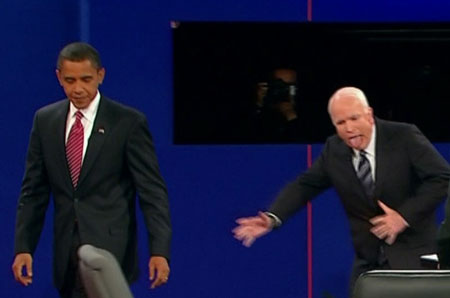
Senator John McCain went into tonight's third and final presidential debate with a new game plan. He would be meaner, more bitter, more petulant, and more prone to fake outrage. This plan, he hoped, would be enough to revive his fading campaign. But in case it wasn't, he had a secret weapon—a weapon named Joe.
The debate confused the aliens from a distant solar system who, three weeks ago, figured out how to decode our Satellite TV and translate English. After studying the first two presidential face-offs, they'd concluded that General David Petraeus was one of the most influential figures on the planet.
Based on the pale, wrinkled organism's constant references, they inferred that the American people held the good General in an affection usually reserved for the likes of Jesus Christ, William Shakespeare, Albert Einstein or Harrison Ford. "Obama insulted General Petraeus by opposing the surge—which is much worse than supporting a disastrous war that cost us the lives of brave young men and helped put the country in financial ruin. General Petraeus thinks that Obama's an inexperienced sissy," said McCain's extraterrestrial translators.
Yet there was no mention of Petraeus in the final debate. Instead, McCain spent most of his time addressing one single person, Joe "The Plumber" Wurzelbacher. At this point, the alien leader said, "Fuck it. Let's get caught up on 'Lost'."
In a recent campaign event in Toledo, Ohio, Joe the Plumber asked Senator Barack Obama why the small business that he hypothetically might buy and that hypothetically might make slightly more than $250,000 a year would see a minor tax increase under his plan. As seen on video, The Big O articulately explained to Joe the Plumber that only his hypothetical income above $250,000 would hypothetically be taxed at a higher rate. He also used the phrase "spread the wealth around," which is code for either "turn the country into a Communist dictatorship" or "leave the middle-class with enough money to afford services like plumbing. Joe the Plumber replied that he worked hard, and shouldn't be punished for his hard work. He works hard.
The Big O thought that those five minutes were the end of his conversation with this McCain supporter posing as an undecided voter, but it turned out he had about 90 more. McCain had big plans for this man whom Obama would tax an extra $0 to $900 a year (not counting other deductions built into The Big O's plan), depending on where he fell in his possible income range of $250-280K a year.
McCain has a knack for leaching onto something and harping on it so insistently as to become a parody of himself. He did it with Petraeus, the Chicago Planetarium's projector and anything else remotely resembling an earmark. Now it was Joe's turn. McCain awkwardly attempted to turn Joe the Plumber into an average Joe with an above-average income, an everyman whom Obama wants to tax to death. McCain began nearly every response with phrases like "My old buddy Joe—Joe the Plumber—is out there…" before launching into rambles on healthcare, taxes, or whatever else came up.
It was inevitable that Joe the Plumber would be the hot target of the media's post-debate coverage, and Joe turned out to be a ready and willing interviewee. On CBS, he revealed that, while he may be an everyman who doesn't get the fancy GOP talking-point memos, he can pick things up quick. "Sure, I've heard nothing but Barack-this and Obama-that for the past 200 years of this god-forsaken, everlasting election cycle," he seemed to say, "but I just don't know enough about him. He's a mystery wrapped in a riddle inside an enigma! McCain on the other hand—I know where he stands. He stands against quality educational facilities like planetariums. He stands for expensive wars, under-qualified running mates and any strategy that might boost his sinking poll numbers. But perhaps most importantly, he stands with the good General Petraeus."
Crossposted at Daily Kos.
Monday, September 29, 2008
What I've been doing

Many have been wondering why I haven't been posting. Well, I've been working on recording some delectable, popadelic, hauntingly poetic indie-pop to bop your head and drink away your sorrows to. Check out the NSPS Facebook page.
Tuesday, August 12, 2008
Craig Froehlich: 1971-2008

If ever a situation required a laugh, Craig Froehlich was the man to provide it. Whether he was addressing a calamity of international proportions, celebrity news fodder or a personality that was at-odds with his own, Craig cut it down to its essence with his acerbic wit and insight. Whenever I hear something that makes me throw my arms in the air in disbelief, I think "I can't wait to hear what Craig has to say about this!"
As long as the world spins on with its foibles, ironies and outrages, that thought will no doubt reverberate in my head. But it breaks my heart that I will no longer have the pleasure of finding out. Craig died Monday morning after a long battle against alcoholism and depression. He left behind many devastated friends and family members who still remember him in his most happy and inspired moments. They include sister Carmen Watkins and her three daughters, brother Kevin Froehlich, mother Gertrud Anderson and father Darryl Froehlich.
Craig moved to Salt Lake City from Detroit in 1994, and completed his BA in Mass Communications at the University of Utah in 2002. We met when he came to the Daily Utah Chronicle and RED Magazine to pursue his love of writing. There, I had the pleasure of working with him and reading his material on a regular basis.
Craig was a ferocious reader, a lover of literature, history, humor, music and film. It was rare to find a topic on which he wasn't knowledgeable, and rarer still to find one from which he couldn't yank laughs. His drive to know everything spilled into his writing. Even the breeziest of his comedic gems entailed a great deal of research—he wanted to know his target before he lambasted it, to ensure his jokes were spot on.
Once, when I was his editor at the University of Utah's RED Magazine, he called a local burger joint near campus because he wanted to make a joke about the "World-Famous Pastrami Burger" sign outside their restaurant. Nevermind that his piece was about John Kerry, he needed to make sure he quoted the sign correctly. Unfortunately, the employee who worked there wasn't so aware of his surroundings, and didn't even know the sign even existed. Much to Craig's dismay, the minimum-wage-earning mope wouldn't go outside and check, and since we were on deadline, we couldn't check it ourselves. I suggested an alternative to the gag, but he remained bemused that this employee wouldn't aid his mischievous comedic scheme.

I've been going over the writing Craig left behind since receiving the news, and reading it is the best way to lift my spirits after. It doesn't replace having him here in person—the charming banter, the off-the-cuff remarks so clever you're not sure you really heard them, the hilarious storytelling and excited declarations—but it certainly reminds us of his unmistakable spirit. He was able to find the perfect way to cut down his subject with the wrong end of his axe, whether commenting on the shortcomings of ethnic nomenclature ("Many blacks feel far more American than African. Many whites have no idea what "Caucasian" means and refuse to be called European Americans for fear their women will stop shaving their armpits."), Republican political strategy ("God, Guns and Gays—or more specifically, threatening the latter with the first two.") or tourist souvenirs ("Sea turtles swaggered through town in flashy clothing and demanded money from helpless artisans and shopkeepers. To combat this menace, a Mexican freedom fighter known only as Señor Frog built countless resort hotels on Cancun’s immaculate stretch of beaches. These hotels decimated the habitat where the turtles laid their fragile eggs. Fertile turtles of yesterday now face extinction (a serious blow to their intimidation factor). Many of Cancun’s grandest shot glasses and T-shirts now bear the name of the heroic frog.").

Craig wouldn't abide sugar-coating—he avoided sentimentality and never hesitated to tell friends—or complete strangers—exactly what was on his mind. When people were building Miis at a Wii party, he took pleasure in pointing out when people were selecting features they wish they had, rather than ones that resembled their real-life looks. Of course, no one could accuse him of hypocrisy after seeing the comically sad little avatar he cooked up.
Once, I took him to an emergency room to receive treatment for a kidney stone that would not pass. His extreme pain combined with the tedious banter of the people sitting near us and, of course, his own personality to generate a reaction I'll never forget. As the man talked nonsense about celebrities, gun laws and stem-cell research, Craig cut him off. "Oh, will you shut the hell up!" he snapped, adding a disgruntled "PLEASE!" after seeing the unimpressed expression on the offender's face.
As his incessant banter suggested, the talking man wasn't as frightened of a confrontation as me, the silent fellow sinking in his seat. "If you don't like it, go somewhere else," he replied. While Craig mercifully relented from pushing the point further and apologized, he later mused about where he was supposed to go. "I'm in a freaking emergency room, for crying out loud." The detail he most ardently brought up, however, was that he did, after all, say please.
While Craig's social form may have been a bit unconventional, it let you know that he was never blowing smoke up your ass. If he asked about how something was going or how people were doing, you knew it was because he really cared.
So I can't sugar-coat this memorial, lest I hear him say, "You've gotta be kidding me!" in my head. The last several years of his life saw his addiction to alcohol grow worse and worse, and we saw less and less of the Craig we know and love. There was only so much time his loved ones could devote to enacting a recovery before becoming frustrated and exhausted. But even when he was sick in the hospital and experiencing great pain, he still took the time to ask about how everyone was doing, and tell some jokes to put our sad selves at ease.

Like most people who see the absurdities of the world in a special way, Craig was frustrated that others couldn't see them so easily. He loved his country, and his planet, but was continually upset that neither were as perfect as they should be. And while he never reached the levels he aspired to in life, he left us with a tremendous collection of work that makes us laugh while we shake our heads at how ridiculous it all is.
Below are links to some of Craig's best writing. Please share your own memories and thoughts on Craig in the comments section. This is a very sad moment, but Craig would be displeased if we didn't spend it laughing.
RED Through the Ages. To kick off the school year in Fall 2003, Craig wrote this introduction to RED Magazine. Sending up more than 100 years of history through the eyes of imagined college A&E publications. "1912—The Titanic sinks with 1,500 souls on board. 'It would make a smashing moving-picture show,' the editor of The Ute Artful Dodger muses, 'if only one could seamlessly write the gratuitous display of boobs into the story.'"
Façade: Interactive Videogames Take a Small Step Forward. A Review of an ambitious, but buggy-as-hell artificial intelligence game (or interactive drama). "If you want to shoot people or baskets, chances are you can find a video game that satiates your needs. If you want interaction and a chance to express personality and intellect, chances are you’ll need to stoop to speaking to other Homo sapiens."
Will Joke For Food. Craig profiles the hardships of local standup comedians for Salt Lake City Weekly. "Being a professional comedian requires compromises and obedience to the gods of income. Decisions to wring a living out of making people laugh demands diligence and a smidgen of insanity. A hard-working comedian can still skirt the poverty level, but it’s a world where only bad timing, horrible pay and a Klan rally discourages a comic from accepting a gig."
The Salt Shaker's 1977 Star Wars review. In honor of the prequel trilogy, Craig wrote this "archival review" of the original "Star Wars"—a 1977 article by "Anakin Mathews." It ran in our inaugural issue. "With or without the wars, Hamill’s star is definitely on the rise."
RED Magazine's endorsement of John Kerry. Note that because Craig couldn't get confirmation on B & D Burgers' world famous pastrami sign before deadline, he had to settle for the Training Table's claim to world-famous cheese fries. He always regretted the compromise and remained convinced that the B & D pastrami burger would have resulted in a funnier gag.
Christ and Comic Books on Main Street of SLC. Craig wonders if Chick Tracts will be distributed in downtown Salt Lake City. "Approach your stroll through the Main Street "Free-Speech-O-Rama" Plaza as would a cultural anthropologist. Observe outsiders with attentive impartiality and read comic books with the utmost caution. Those booklets are designed to convert unsuspecting sinners after only one reading."
The Best Film Fest in the West. Craig's send-up of the Sundance Film Festival was so funny, I ran it during two different festivals. "Sundance is devoid of the pretensions and exclusivity of other festivals. Any moron can get a ticket, and they do so in droves."
The Original Draft of the Bill of Rights. "Excessive bail shall not be required although every bail is excessive when you’re poor; nor cruel and unusual punishments inflicted such as eating Pop-Tarts in front of a hungry person or dressing up like a pirate and pelting someone with stale pancakes."
In Memoriam: Richard Pryor. Craig looks back on the life of one of his heroes.
The Top News Stories of 2005. Craig's last published work. "President Bush, since he has always held the media in such high esteem, believed that the Big Easy had truly dodged a bullet. He continued a well-deserved 27th vacation at his Crawford, Texas ranch—riding bikes, clearing brush and barbecuin’ up some of that tasty "pork" imported from Guantanamo Bay."
Sunday, July 13, 2008
SFSFF: Stephen Horne Brings Kinugasa to Life
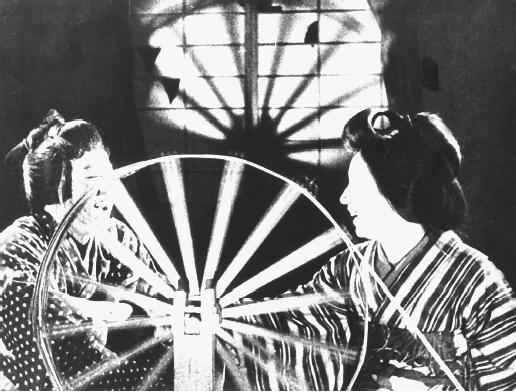

Pianist and silent film accompanist Stephen Horne just electrified the Castro Theatre with a stunning performance that glorified a gorgeous 35-mm print of Teinosuke Kinugasa's "Jujiro" ("Crossways"). He captured the film's mesmerizing, experimental visual language and draining emotional content. The score incorporated flute and other sounds to great effect, and ended in an exhausted, emotional entanglement.
Prior to the feature, Horne accompanied an early experimental color short from the Kodak labs called "Kaleidoscope," which was a perfect prelude, as the performance reflected the film's building blends of shapes, colors and light (I know, it sounds like one of George Lucas's upcoming projects).
There have been a lot of fine performances by orchestras, oranists, quartets and pianists at the San Francisco Silent Film Festival this year, but this one (Horne's third), I'll never forget.
Saturday, July 12, 2008
SFSFF: 'The Kid Brother'
The Silent Film Festival opened last night with a screening of Harold Lloyd's "The Kid Brother," the silent clown and filmmaker's second-to-last silent feature, and by some accounts his favorite.
The festival, which has gone from a one-day event to a three-day marathon since I last attended, projects pristine prints of a variety of silent masterpieces, all on the giant screen of the historic Castro Theatre—one of the best places in the world to watch movies. Even Leonard Maltin, who one would assume has been to his share of fabulous screenings by this point in his career, expressed his amazement at the size of the screen and the clarity of the newly restored Buffalo Bill short that played before the main feature.
Before "The Kid Brother" screened, Maltin interviewed Lloyd's granddaughter, Suzanne Lloyd, who has devoted her life to the preservation and promotion of her grandfather's work. Lloyd shared her memories of her grandfather while Maltin demonstrated his passion and knowledge.
Maltin attributed Lloyd's diminished stature compared to contemporaries Keaton and Chaplin to his refusal to let his work be shown on television. (Personally, while Lloyd's films are always packed with clever gags and exciting comedic action, I find his everyday bozo to lack some of the magic of Keaton.) Suzanne remembered Harold saying that if all these people took the time to get together and create gags and shoot and edit and re-work a movie, it shouldn't be chopped up and interrupted by car salesman. She credited channels like Turner Classic Movies for allowing Harold's work to be widely seen on television without betraying his wishes.
The festival screening revealed, as it always does, the stunning image quality that the silents had when they were first shown. Lloyd's best moments, like the tree-climbing shot, feel all the more magical when you can see them with the detail and attention that was intended.
bxAv110
bxAv110
bxAv110
The festival, which has gone from a one-day event to a three-day marathon since I last attended, projects pristine prints of a variety of silent masterpieces, all on the giant screen of the historic Castro Theatre—one of the best places in the world to watch movies. Even Leonard Maltin, who one would assume has been to his share of fabulous screenings by this point in his career, expressed his amazement at the size of the screen and the clarity of the newly restored Buffalo Bill short that played before the main feature.
Before "The Kid Brother" screened, Maltin interviewed Lloyd's granddaughter, Suzanne Lloyd, who has devoted her life to the preservation and promotion of her grandfather's work. Lloyd shared her memories of her grandfather while Maltin demonstrated his passion and knowledge.
Maltin attributed Lloyd's diminished stature compared to contemporaries Keaton and Chaplin to his refusal to let his work be shown on television. (Personally, while Lloyd's films are always packed with clever gags and exciting comedic action, I find his everyday bozo to lack some of the magic of Keaton.) Suzanne remembered Harold saying that if all these people took the time to get together and create gags and shoot and edit and re-work a movie, it shouldn't be chopped up and interrupted by car salesman. She credited channels like Turner Classic Movies for allowing Harold's work to be widely seen on television without betraying his wishes.
The festival screening revealed, as it always does, the stunning image quality that the silents had when they were first shown. Lloyd's best moments, like the tree-climbing shot, feel all the more magical when you can see them with the detail and attention that was intended.
Friday, July 11, 2008
Wall-E and Buster Keaton: Vaguely Related to this year's SFSFF
I just arrived in San Francisco for the city's annual Silent Film Festival and am mega-excited about seeing a collection of films as they were meant to be seen, in 35-mm with live musical accompaniment.
This year, the festival arrives with great timing. Next week, the Batman film "The Dark Knight" comes out; and this week, SFSFFF's centerpiece is "The Man Who Laughs," the film that inspired Batman's greatest villain, The Joker. And two weeks ago, the largely silent "Wall-E" charmed filmgoers everywhere.
The brilliant offering from Pixar Animation Studios is chock full of references and echoes of great films past, my favorite of which involves my favorite filmmaker, Buster Keaton (none of whose films are on this year's SFSFF roster).
One Keaton's trademarks was his characters' logical deduction in the face of repeating oddity. Keaton knew not only how to create great gags, but how to build them into increasingly absurd scenes of comedic genius. Take, for example, the scene in "The General" in which he tries to give orders to a number of soldiers, all of whom fall victim to an unseen sniper before he can complete instructions. At first, Buster handles the situation calmly and proceeds to the next soldier, only to see that one drop dead as well. Puzzled, he slowly inches toward the next one with a suspicious look on his face, hesitant to give the order that will bring about the inevitable.
In the case of Wall-E, the trash-compacting has encountered a cleaning robot whose task is to tidy up all external contaminants on a resort space station. Wall-E, having spent the past 700 years rolling around on a trash-contaminated earth, is understandably filthy. He rolls, a trail of dirt is left on the shiny white floor, the cleaning robot spazzes and quickly cleans up the mess. But of course, as soon as Wall-E moves, there's more mess. This interplay of aggravation builds up, and Wall-E begins to pick up on his friend's peculiar behavior. So curiously begins some experiments of his own. He sticks his wheel-chains out just a little bit, and sees the robot address the little dirt smudge with the same level of ferocity. Having detected the pattern, Wall-E tried something new: He smudges the dirt right across the robot's face. Pure brilliance. Pure Keaton.
bxAv110
bxAv110
bxAv110
This year, the festival arrives with great timing. Next week, the Batman film "The Dark Knight" comes out; and this week, SFSFFF's centerpiece is "The Man Who Laughs," the film that inspired Batman's greatest villain, The Joker. And two weeks ago, the largely silent "Wall-E" charmed filmgoers everywhere.
The brilliant offering from Pixar Animation Studios is chock full of references and echoes of great films past, my favorite of which involves my favorite filmmaker, Buster Keaton (none of whose films are on this year's SFSFF roster).
One Keaton's trademarks was his characters' logical deduction in the face of repeating oddity. Keaton knew not only how to create great gags, but how to build them into increasingly absurd scenes of comedic genius. Take, for example, the scene in "The General" in which he tries to give orders to a number of soldiers, all of whom fall victim to an unseen sniper before he can complete instructions. At first, Buster handles the situation calmly and proceeds to the next soldier, only to see that one drop dead as well. Puzzled, he slowly inches toward the next one with a suspicious look on his face, hesitant to give the order that will bring about the inevitable.
In the case of Wall-E, the trash-compacting has encountered a cleaning robot whose task is to tidy up all external contaminants on a resort space station. Wall-E, having spent the past 700 years rolling around on a trash-contaminated earth, is understandably filthy. He rolls, a trail of dirt is left on the shiny white floor, the cleaning robot spazzes and quickly cleans up the mess. But of course, as soon as Wall-E moves, there's more mess. This interplay of aggravation builds up, and Wall-E begins to pick up on his friend's peculiar behavior. So curiously begins some experiments of his own. He sticks his wheel-chains out just a little bit, and sees the robot address the little dirt smudge with the same level of ferocity. Having detected the pattern, Wall-E tried something new: He smudges the dirt right across the robot's face. Pure brilliance. Pure Keaton.
Saturday, July 5, 2008
Our Action Sequence of Discontent
Hancock is the first movie super-hero to deserve a write-up for drunk-flying. As he soars through the skies of Los Angeles, bitter that a young boy woke him from his drunken bus-stop slumber so he could intervene in a high-speed chase, his flight stands out from all the other crumby CG scene in every other super hero movie. It's erratic. If there were lanes in the sky, he'd be swerving in and out of his, and knocking over some bus stops, too.
It's not that he's still learning how to use his powers, it's that he doesn't care.
"Hancock" goes a long way simply with the ingenious casting of Will Smith in the title role. The imminently likable Smith has established himself as the quintessential action hero of his generation, and now he offers us a malcontent anti-hero who doesn't like his job.
In the film's best scene, a giant crowd surrounds Hancock after he rescues a man who couldn't get out of his car, which was stuck on the track of an oncoming train. The crowd isn't there to praise Hancock, but to critique his admittedly inept way of handling the rescue. He should have done it different, and if he had, he would have caused a whole lot less damage. They have a point, but we get the feeling that Hancock might be a little better at heroics if he weren't so insecure about the way people think of him.
The man Hancock rescues turns out to be a public-relations wizard, and he offers to help turn around the hero's image. Jason Bateman is funny as usual in the role, but Vincent Ngo and Vince Gilligan's screenplay could have provided more dimension (the tacked-on plot about his charity brand that will change the world notwithstanding). Nevertheless, he and Smith have a slap-happy awkward chemistry as he gets to know the hero and brings him home to meet his wife (Charlize Theron), who looks upon Hancock with suspicion and mistrust, and son, who actually likes the guy.
Running around 90 minutes, "Hancock" could have benefitted from a longer runtime to develop all its themes. As it is, it seems to throw ideas at us, then abandon them for something else. The film's villains are so poorly set up that they might as well not be in the film at all, and the third act, while full of interesting developments, devolves into aimless action right when it needs to build on its ideas.
But in its best moments, "Hancock" is good for some nice laughs and character humor, along with the requisite summer excitement.
bxAv110
bxAv110
bxAv110
It's not that he's still learning how to use his powers, it's that he doesn't care.
"Hancock" goes a long way simply with the ingenious casting of Will Smith in the title role. The imminently likable Smith has established himself as the quintessential action hero of his generation, and now he offers us a malcontent anti-hero who doesn't like his job.
In the film's best scene, a giant crowd surrounds Hancock after he rescues a man who couldn't get out of his car, which was stuck on the track of an oncoming train. The crowd isn't there to praise Hancock, but to critique his admittedly inept way of handling the rescue. He should have done it different, and if he had, he would have caused a whole lot less damage. They have a point, but we get the feeling that Hancock might be a little better at heroics if he weren't so insecure about the way people think of him.
The man Hancock rescues turns out to be a public-relations wizard, and he offers to help turn around the hero's image. Jason Bateman is funny as usual in the role, but Vincent Ngo and Vince Gilligan's screenplay could have provided more dimension (the tacked-on plot about his charity brand that will change the world notwithstanding). Nevertheless, he and Smith have a slap-happy awkward chemistry as he gets to know the hero and brings him home to meet his wife (Charlize Theron), who looks upon Hancock with suspicion and mistrust, and son, who actually likes the guy.
Running around 90 minutes, "Hancock" could have benefitted from a longer runtime to develop all its themes. As it is, it seems to throw ideas at us, then abandon them for something else. The film's villains are so poorly set up that they might as well not be in the film at all, and the third act, while full of interesting developments, devolves into aimless action right when it needs to build on its ideas.
But in its best moments, "Hancock" is good for some nice laughs and character humor, along with the requisite summer excitement.
Wednesday, July 2, 2008
Is "WALL•E" a Godless Commie, or Just Adorable?
Bill Wyman's new column notes that many critics, although I am surely not among them, ignore the material in "WALL•E" that "[attacks] the American way of life." The claim is fair enough, but one can't help but wonder if there wasn't simply too much interesting stuff going on in Andrew Stanton's film to cover in a short review.
For example, imagine that you're a critic for a major daily, and have 450 words to write on a film that you think is fantastic (as most of "WALL•E's" reviewers do). Because you love the movie so much, you want your readers to go see it to. At this point, you can either talk about issues of exercise or obesity, or you can talk about visual bedazzlement, touching characters and perfect storytelling. Which one would you discuss?
What Wyman misses, however, is that kids movies have somehow become, over the past decade, the safest corner of mainstream cinema for political discourse. He opens his piece with:
The thing is, a new Michael Moore movie is such a hot button issue in itself that everyone has already heard about it in the news by the time reviews run on release day. The interest buzzing around over a new Pixar film isn't its underlying political message, but the anticipated high-quality filmmaking and top-rate entertainment. Maybe reviewers decided to let that remain the headline, and let the audience figure out the underlying messages of lifestyle choices on their own.
Truth is, it's easier to get a political screenplay greenlit when it's "Antz" than when it's "Michael Clayton." Add a dash of whimsy and some cute comedy, and the topics of edgy adult dramas make great stories for the kids. While one would expect blowhard TV pundits to be most concerned about the material that appeals directly to the children, family-oriented movies tend to get a free pass as long as they aren't out to convert the tots to atheism or teach them to hate their religious leaders.
Take for example "Robots," 20th Century Fox's 2005 release from its computer-animation studio. The film comes from the same conglomerate responsible for the Fox News Channel and the New York Post, yet delivers a cry for socialism that would feel at home in an Upton Sinclair novel. The world of "Robots" is one in which corporations care only about the bottom line—where greedy CEOs abuse the downtrodden, lower-class worker robots, then discard them when they are no longer useful. The politics are overt enough before the film's rallying cry of a third act: The robots violently overthrow their corporate overlords, take over the means of production and transform their city into a utopian paradise. By comparison, "WALL•E's" commentary on wastefulness, civic responsibility and obesity seems downright tame.
Perhaps theses radical animation directors tapped into the perfect shield from controversy: the lessons people want to teach their kids. No one really wants to look their kid in the eyes and say, "Sorry Skippy, but if that cute little robot is no longer profitable to the company, it's the CEO's responsibility to discard him. He has to think of the shareholders! And there's nothing wrong with sitting on the couch all day staring at a TV screen—you don't need any exercise. Also, sorry I named you Skippy—I hope you don't get the shit kicked out of you at school." So those who disagree with the underlying political principals probably find it easier to pretend they're not there.
bxAv110
bxAv110
bxAv110
For example, imagine that you're a critic for a major daily, and have 450 words to write on a film that you think is fantastic (as most of "WALL•E's" reviewers do). Because you love the movie so much, you want your readers to go see it to. At this point, you can either talk about issues of exercise or obesity, or you can talk about visual bedazzlement, touching characters and perfect storytelling. Which one would you discuss?
What Wyman misses, however, is that kids movies have somehow become, over the past decade, the safest corner of mainstream cinema for political discourse. He opens his piece with:
If Michael Moore, or Oliver Stone, or, God forbid, some effete French director, had crafted a feature film that was a thinly disguised political broadside portraying Americans as recumbent tubbos who moved around on sliding barcaloungers with built-in video screens and soft drinks always at the ready, don’t you think there’d be some sort of notice taken?
But Pixar does it and …
… the reviewers barely mention it.
The thing is, a new Michael Moore movie is such a hot button issue in itself that everyone has already heard about it in the news by the time reviews run on release day. The interest buzzing around over a new Pixar film isn't its underlying political message, but the anticipated high-quality filmmaking and top-rate entertainment. Maybe reviewers decided to let that remain the headline, and let the audience figure out the underlying messages of lifestyle choices on their own.
Truth is, it's easier to get a political screenplay greenlit when it's "Antz" than when it's "Michael Clayton." Add a dash of whimsy and some cute comedy, and the topics of edgy adult dramas make great stories for the kids. While one would expect blowhard TV pundits to be most concerned about the material that appeals directly to the children, family-oriented movies tend to get a free pass as long as they aren't out to convert the tots to atheism or teach them to hate their religious leaders.
Take for example "Robots," 20th Century Fox's 2005 release from its computer-animation studio. The film comes from the same conglomerate responsible for the Fox News Channel and the New York Post, yet delivers a cry for socialism that would feel at home in an Upton Sinclair novel. The world of "Robots" is one in which corporations care only about the bottom line—where greedy CEOs abuse the downtrodden, lower-class worker robots, then discard them when they are no longer useful. The politics are overt enough before the film's rallying cry of a third act: The robots violently overthrow their corporate overlords, take over the means of production and transform their city into a utopian paradise. By comparison, "WALL•E's" commentary on wastefulness, civic responsibility and obesity seems downright tame.
Perhaps theses radical animation directors tapped into the perfect shield from controversy: the lessons people want to teach their kids. No one really wants to look their kid in the eyes and say, "Sorry Skippy, but if that cute little robot is no longer profitable to the company, it's the CEO's responsibility to discard him. He has to think of the shareholders! And there's nothing wrong with sitting on the couch all day staring at a TV screen—you don't need any exercise. Also, sorry I named you Skippy—I hope you don't get the shit kicked out of you at school." So those who disagree with the underlying political principals probably find it easier to pretend they're not there.
Tuesday, July 1, 2008
WALL•E: The Robot Who Rediscovers Humanity
The first five minutes of "WALL•E," place so much visual wonderment on the movie screen that my eyes almost danced out of my skull trying to take in all the details. And it never stops dazzling. Pixar Animation Studios' latest effort presents one among hundreds of cinematic visions of a post-apocalyptic future, but in this one there are no down-and-out humans living in cyberslums or sinister corporate goons who lord over them. With the exception of a cockroach, there's no life at all besides a run-down robot that may be humanity's last hope.
In an uninhabited city whose towering skyscrapers are actually giant stacks of compressed trash cubes, the plucky little robot zips from place to place, scavenging alone on the dusty brown landscape. The scenes of him rolling through the desolate nothingness recall the opening shots of last year's "I Am Legend" (a similarity that's surely unintentional, given the extensive pre-production required of Pixar's computer animation). But there are two key differences between the films. The hero of "WALL•E" is never as dour as Will Smith in "I Am Legend," and there are no vampiric monsters with whom the little fellow has to contend. Also, Smith wasn't cranking the "Hello Dolly" soundtrack while he worked. This is a film about connection, not fear.
It's 800 years in the future, and Earth has become a land of garbage. The humans abandoned it 700 years ago, with plans to return in a few years, when trash-gathering WALL•E robots were supposed to have disposed of it. But the humans never came back, and the sole functioning robot goes about business in his own idiosyncratic manner.
Fred Willard—who is so consistently good that his presence alone earns a smile, plays the film's only live-action part, in old footage of the president of the company that pledged to clean up earth's mess. His is the only voice that says more than a word during the first act of the film.
The trash-filled wasteland is a commentary on a wasteful society, and Willard's promises are ones that appeal to mankind's laziness. Don't stay behind to fix the problem, he says, take a pleasure cruise through space and everything will be fixed when you return. Now, the ignore-the-problems attitude has been passed on for several generations, resulting in an obese human who only knows how to pass the time by looking at computer screens while traveling on hovering chairs.
Director Andrew Stanton, who previously made "A Bugs Life" and "Monsters, Inc.," reaches the highest level of visual storytelling. The personalities of the film's many different robots come through in their movement and sounds—dialogue isn't necessary. WALL•E's mannerisms makes for great comedy and great action. One scene, in which he aggravates a cleaning robot by trying to deduce his motivations, comes right out of Buster Keaton's handbook. The supporting human characters who speak almost feel trite by comparison.
Stanton and his collaborators brilliantly designed their characters and environments, both on the depleted earth and on WALL•E's ensuing journey to outer-space. The designs are both original and full of references, including the most iconic robot-computer of all time, the HAL 9000 from "2001: A Space Odyssey."
WALL•E's solitude must have given his processors lots of time to consider the greater purposes of existence. And so he became a deeply sentimental robot, hungry for interaction and extremely attached to the trinkets that Earth's former inhabitants left behind. He doesn't plow the trash and compact it without thought, as his programmers intended. He sorts through it, looking for special trinkets that interest him—a hand-powered food mixer, a jewelry case (the ring inside, not so much) and, most of all, a VHS player and an old cassette of "Hello Dolly," which shows him the magic of singing, dancing and holding hands.
He brings this hunger for interaction to a human race that has started to forget it. Whether you're a baby or a senior citizen, you can't help but notice the robot's steadfast commitment to friendliness, and the difference it makes. "WALL•E" reminds us of the joys to be had in life's simple gestures, like a wave, a handshake or the beautiful act of holding hands.
bxAv110
bxAv110
bxAv110
In an uninhabited city whose towering skyscrapers are actually giant stacks of compressed trash cubes, the plucky little robot zips from place to place, scavenging alone on the dusty brown landscape. The scenes of him rolling through the desolate nothingness recall the opening shots of last year's "I Am Legend" (a similarity that's surely unintentional, given the extensive pre-production required of Pixar's computer animation). But there are two key differences between the films. The hero of "WALL•E" is never as dour as Will Smith in "I Am Legend," and there are no vampiric monsters with whom the little fellow has to contend. Also, Smith wasn't cranking the "Hello Dolly" soundtrack while he worked. This is a film about connection, not fear.
It's 800 years in the future, and Earth has become a land of garbage. The humans abandoned it 700 years ago, with plans to return in a few years, when trash-gathering WALL•E robots were supposed to have disposed of it. But the humans never came back, and the sole functioning robot goes about business in his own idiosyncratic manner.
Fred Willard—who is so consistently good that his presence alone earns a smile, plays the film's only live-action part, in old footage of the president of the company that pledged to clean up earth's mess. His is the only voice that says more than a word during the first act of the film.
The trash-filled wasteland is a commentary on a wasteful society, and Willard's promises are ones that appeal to mankind's laziness. Don't stay behind to fix the problem, he says, take a pleasure cruise through space and everything will be fixed when you return. Now, the ignore-the-problems attitude has been passed on for several generations, resulting in an obese human who only knows how to pass the time by looking at computer screens while traveling on hovering chairs.
Director Andrew Stanton, who previously made "A Bugs Life" and "Monsters, Inc.," reaches the highest level of visual storytelling. The personalities of the film's many different robots come through in their movement and sounds—dialogue isn't necessary. WALL•E's mannerisms makes for great comedy and great action. One scene, in which he aggravates a cleaning robot by trying to deduce his motivations, comes right out of Buster Keaton's handbook. The supporting human characters who speak almost feel trite by comparison.
Stanton and his collaborators brilliantly designed their characters and environments, both on the depleted earth and on WALL•E's ensuing journey to outer-space. The designs are both original and full of references, including the most iconic robot-computer of all time, the HAL 9000 from "2001: A Space Odyssey."
WALL•E's solitude must have given his processors lots of time to consider the greater purposes of existence. And so he became a deeply sentimental robot, hungry for interaction and extremely attached to the trinkets that Earth's former inhabitants left behind. He doesn't plow the trash and compact it without thought, as his programmers intended. He sorts through it, looking for special trinkets that interest him—a hand-powered food mixer, a jewelry case (the ring inside, not so much) and, most of all, a VHS player and an old cassette of "Hello Dolly," which shows him the magic of singing, dancing and holding hands.
He brings this hunger for interaction to a human race that has started to forget it. Whether you're a baby or a senior citizen, you can't help but notice the robot's steadfast commitment to friendliness, and the difference it makes. "WALL•E" reminds us of the joys to be had in life's simple gestures, like a wave, a handshake or the beautiful act of holding hands.
Wednesday, June 11, 2008
Dear George
The Scotsman's Andrew Eaton has written an open letter to one George Lucas, whom you may know as a famed filmmaker, CGI-lover, compulsive masturbator and regular in The Same Dame's comments section (come on, what are the odds that it's not really him?) In it, Eaton references George's long-planned career in small art films that somehow never actually get made, although there is a new Star Wars film out in August!. Maybe that's the small, experimental film about light, movement and color that he described in a Cannes press conference.
bxAv110
bxAv110
bxAv110
Indiana Jones took up loads of your time too. For years, Harrison Ford and Steven Spielberg kept arguing that a giant alien spaceship wouldn't work in an Indiana Jones movie! They weren't the only doubters either. Lots of people felt that the Indy movies are about an intrepid archaeologist digging up mysterious relics from the past, and that putting a giant alien spaceship in it would be a bit like, well, writing a fantasy epic about a noble warrior turning to the dark side, and ending up so hideously deformed that he needed to wear a black metal suit to stay alive, and then deciding that what it really needed was a comedy Rastafarian alien sidekick, with a stupid, racially insensitive voice, to provide "comic relief" by falling over and getting his arm trapped in machinery. It would be, you know, a bit incongruous.
Wednesday, June 4, 2008
Amazing Sites, No Computers
Roger Ebert reminds us just how nice it is to have him back with his interview with director Tarsem on his latest film, "The Fall."
Reading the interview, it becomes apparent that Tarsem accomplished a feat simply by willing the film into existence. The Indian director ("The Cell") made his career directing commercials and music videos, making a lot of money while living under modest means until one day, he decided to spend his millions on something he cared about.
The film combines a touching relationship between a suicidal, paralyzed Hollywood stuntman (Lee Pace) and a young immigrant girl (Catinca Untaru) and the surreal fantasy he tells her from his bedside. Tarsem accurately portrays the fantasy as the young girl sees it in her mind. The storyline resembles a dream in its extremely simplistic yet murky execution. Excursions and sideshows distract from the main plot, which would cause the film to unravel if the plot in reality weren't actually the one that mattered.
Tarsem also reveals the secret behind his striking visuals: location scouting. The locations all exist in reality, although in some cases the director helped bend the reality to his will.
bxAv110
bxAv110
bxAv110
Reading the interview, it becomes apparent that Tarsem accomplished a feat simply by willing the film into existence. The Indian director ("The Cell") made his career directing commercials and music videos, making a lot of money while living under modest means until one day, he decided to spend his millions on something he cared about.
The agencies that made commercials, he said, "gave me very good money and I didn't complain about it. I put it aside like a little squirrel and at the end I ended up with a project that I wanted to do very badly and threw it all away, so now I’m penniless but as happy as a pig in poo. I told my brother, sell everything, I’m going on this magical mystery tour. When I finish it, I’ll let you know. I called him when it was almost done. He said the house was almost up for sale. But I was finished."
He has a quick smile and makes his struggle sound like a lark.
The film combines a touching relationship between a suicidal, paralyzed Hollywood stuntman (Lee Pace) and a young immigrant girl (Catinca Untaru) and the surreal fantasy he tells her from his bedside. Tarsem accurately portrays the fantasy as the young girl sees it in her mind. The storyline resembles a dream in its extremely simplistic yet murky execution. Excursions and sideshows distract from the main plot, which would cause the film to unravel if the plot in reality weren't actually the one that mattered.
"If you think it’s hard raising money for a film, try telling people that the script is going to be written by a 4-year old. It’s going to be dictated to me by a child. For seven years wherever I would shoot a commercial I would send people out with a camera to schools, and one day I got a tape of this girl at a school in Romania, in the middle of students talking. I was amazed. She was perfect. She didn't speak English. The penny dropped. She was six, but if she didn’t speak the language she would be using, the misunderstanding would buy me the two years that I needed. Because she had to seem four.
Tarsem also reveals the secret behind his striking visuals: location scouting. The locations all exist in reality, although in some cases the director helped bend the reality to his will.
"Jodhpur, the blue city, is a Brahmin city where you’re only supposed to paint your house blue. I made a contract with the city; we would give them free paint. We knew legally they could only choose blue. So they painted their houses blue and it looked more vibrant than it ever had before."
Friday, April 11, 2008
Where will HD Go? Nobody Knows
In Which I Talk About How Great HD is While I Complain About What's Wrong with Every HD Format That Crosses My Mind
As someone who was never particularly impressed with the digital projection craze or HD movie productions, I didn't expect to be blown away by either of the competing HD media formats. But when I saw "2001: A Space Odyssey" on HD DVD, I bought into it quicker than George Lucas would pay for a digital whore (that he made for himself at ILM, of course).
The leap in home video quality is revelatory. While I'd love to watch every movie I see in its original film format, that's a pipe dream. Given the sorry state of repertory films in all but a few cities in this nation, most film lovers have no method outside of the home to view classics or undiscovered gems that were released more than a year ago. I jumped at the prospect of watching films at home with some of their detail and color accuracy restored.
Of course, I backed the wrong horse and picked up an inexpensive HD DVD player because it was clearly the more consumer-friendly format, and presented more opportunities to indie filmmakers and studios. (Short filmmakers, for example, could author HD transfers of their films onto a regular DVD or DVD+/+DL/-R for HD DVD playback. Think of the low production costs for "Cops" or "Un Chien Andalou" in HD, damn it!)
I misjudged the amount of money Sony was willing to pour into this war—especially for Warner Bros. exclusivity. As it happens, I'm still happy with the purchase—I have a great up-convertor for my regular DVDs and don't plan to invest in any of the remaining HD solutions until they come down in price and/or prove themselves the dominant format. And I somehow wound up with nearly 50 HD DVDs and a $50 gift certificate by spending less than I would have for a Blu-ray player.
With Blu-ray Disc as the remaining optical-disc medium, we now have a herd of HD options that aren't particularly conducive to consumer adoption. While I hope that one will win out, ensuring more and more HD transfers and releases, it's possible that none will, and that BD will exist only as a niche format. The Super Audio CD offered better sound than CDs, but most music-listeners were too busy ripping and downloading lower-than-CD-quality mp3s to notice. And while more and more people have been investing in HDTVs, they've more likely grabbed a cheap up-converter than a Blu-ray or HD DVD machine. So it's really anyone's game.
Blu-ray
Buried amongst Blu-ray Disc's pain-in-the-ass DRM, region coding, in-fighting, and inconsistent and unfinished specs is the best picture and sound quality of any HD option still standing. Blu-ray also shares its size and dimensions with DVD, making the discs familiar and the players hospitable for old (or new) DVDs. (When the war was still being waged, Sony execs said that people should just by regular DVDs of the HD DVD studios' films and up-convert with their BD player.)
Now that Sony has won the war, it needs to launch an assault on DVD, but Sony actually raised one of its player's since HD DVD's demise. If the players weren't so damn expensive, they might appeal to the folks who are buying up-converters for a quarter to an eighth of the price.
People forget that the DVD didn't kill VHS with only its picture quality and loads of versatile features. It offered the new, superior movie experience for a fraction of the price people were paying for VHS tapes or Laserdiscs. If studio execs think they would have sold nearly as many catalogue movies and TV shows at two to four times the price, they are sadly delusional.
There are plenty of early adopters who are willing to pay premiums, but those adopters can only make Blu-ray a niche format. Certain people, like those who owned laserdiscs (I still have mine), are willing to pay a premium to watch films in the best quality available for their home theaters, but others want to play the movies they own in many different places.
The majority of consumers (including those who own BD and/or HD DVD players) still purchase DVDs with gleeful disregard of their inferior picture quality. You have to wonder how many movies most people will add to their Blu-ray collections. Even if everybody decided to get a BD player, they'd probably only get one, to use in their nice home theater setup (yes, I know that not everybody has a "nice home theater setup"). It'd be pointless on the small TV in their car, overkill for the bedroom, too costly for the kids' playroom. So they're still going to have DVD players around the house. That means that every time they buy a movie, they'll have to decide whether to purchase a DVD that they can play anywhere, or a BD that they can play in one room.
A lot of people ragged on the HD DVD combo format, which included DVD on one side and HD DVD on the other, but I experienced its usefulness multiple times when I lent friends the combo discs of "Knocked Up" and "The Assassination of Jesse James by the Coward Robert Ford." Maybe now that HD-DVD is dead, Blu-ray can reach an agreement that allows for a combo disc format.
The longer it takes Sony and its Blu-ray pals to make their format cheap and flexible, the more time they give other options to come in and take their place. Luckily for them, the most threatening option isn't as close as we think.
Downloads
Many have predicted that Blu-ray will soon die out to downloaded content, but this assumption jumps the gun and overlooks key factors. First of all, we who use the Internet nonstop sometimes forget that there are many among us who do not. When a blizzard hindered the Utah Film Critics Association's awards voting, I tried to setup a chat group via AIM and iChat, only to learn that several of my colleagues had only slow dial-up connections at home and had no idea how to do anything but check their email. (I hope my colleagues appreciate that I didn't go for the easy addition of "and look up porn" to that joke. Just for you, guys. Just for you.)
So let's not get carried away about how quickly downloadable movies will catch on. While popular amongst its users, Xbox Live, like Blu-ray, feels too tied to its videogame system to reach success amongst the masses. Even the best device for this type of thing, Apple TV, comes with several negatives.
As I wrote when it first came out, Apple TV does what it does incredibly well, yet lacks the consumer appeal of the iPod. There's no reason that Apple's normal strategy of implementing a few key features amazingly well shouldn't work for the Apple TV, except that most people can't easily use the device to play any digital video that they want—not true for their iPods in regards to their music collection.
In my case, I'd be on Apple TV in a second if I could actually use it to watch all the movies I want to watch. But it can't play all the formats Quicktime can, and the iTunes store doesn't have the movies I want to watch. I do much better with an HD DVR and channels like World Cinema HD.
Consumers can't rip their DVDs through iTunes due to DRM and the laws that protect it, (Downloadable programs like Handbrake won't crossover to the mainstream.) And even if they could, most of us don't have the hard disc space to make it work.
When the Blu-ray and HD DVD of "The Assassination of Jesse James by the Coward Robert Ford" came out, several reviews complained about the image quality, and how the transfer was on a single-layer Blu-ray Disc, meaning it's less than 25 GB.
How about a moment of thought.
How much free space do you have on your hard drive right now? An Apple TV comes with a 40GB hard drive or a 160 GB hard drive. Gee, that gives us either two or eight movies at sub-BD quality. Those who just rent anyway might not mind, except for the selection factor I mentioned earlier.
Given the Apple TV's fantastic design, it could become a hit if only Apple could come up with a reason people should buy one. New implementations, such as ordering movies direct from the Apple TV device, are an improvement. But as John Gruber pointed out, 24 hours is too short a window to start and finish their movie. And I'd like to feel like I'm not just buying the device so I can go spend money at the iTunes music store.
Apple isn't even going for the super-HD crowd, using 720p as Apple TV's native output. This strategy may prove a cost-effective way to keep prices down, especially when many can't see the difference.
Video-On-Demand Cable
On-Demand may very well become a popular way for people to expand the use of their already installed cable receivers. But let's not hope for it to become the standard.
As iLounge found in their comparison of "Live Free or Die Hard" on four different formats, on-demand cable has a higher resolution than DVD, but also uses higher compression. The result is a more detailed picture when there isn't much motion, but increased compression artifacts during fast action. Unconverted DVD offered the better presentation of the film in many instances.
Just as important (for me, anyway), on-demand was the only service that didn't offer the film in its correct aspect ratio.
And in the particular case of "Live Free or Die Hard," what the fuck's up with the colors?
My prediction? Well, I'd like an Apple TV, but expect that I'll eventually end up with a Blu-ray player once they can be purchased for less than $200. But whichever format gets Buster Keaton's complete catalogue from 1920 to 1928 on HD first will have my support. (I'll even give you—I'm addressing the format, here—a break and let you leave off "The Saphead," if you must.)
bxAv110
bxAv110
bxAv110
As someone who was never particularly impressed with the digital projection craze or HD movie productions, I didn't expect to be blown away by either of the competing HD media formats. But when I saw "2001: A Space Odyssey" on HD DVD, I bought into it quicker than George Lucas would pay for a digital whore (that he made for himself at ILM, of course).
The leap in home video quality is revelatory. While I'd love to watch every movie I see in its original film format, that's a pipe dream. Given the sorry state of repertory films in all but a few cities in this nation, most film lovers have no method outside of the home to view classics or undiscovered gems that were released more than a year ago. I jumped at the prospect of watching films at home with some of their detail and color accuracy restored.
Of course, I backed the wrong horse and picked up an inexpensive HD DVD player because it was clearly the more consumer-friendly format, and presented more opportunities to indie filmmakers and studios. (Short filmmakers, for example, could author HD transfers of their films onto a regular DVD or DVD+/+DL/-R for HD DVD playback. Think of the low production costs for "Cops" or "Un Chien Andalou" in HD, damn it!)
I misjudged the amount of money Sony was willing to pour into this war—especially for Warner Bros. exclusivity. As it happens, I'm still happy with the purchase—I have a great up-convertor for my regular DVDs and don't plan to invest in any of the remaining HD solutions until they come down in price and/or prove themselves the dominant format. And I somehow wound up with nearly 50 HD DVDs and a $50 gift certificate by spending less than I would have for a Blu-ray player.
With Blu-ray Disc as the remaining optical-disc medium, we now have a herd of HD options that aren't particularly conducive to consumer adoption. While I hope that one will win out, ensuring more and more HD transfers and releases, it's possible that none will, and that BD will exist only as a niche format. The Super Audio CD offered better sound than CDs, but most music-listeners were too busy ripping and downloading lower-than-CD-quality mp3s to notice. And while more and more people have been investing in HDTVs, they've more likely grabbed a cheap up-converter than a Blu-ray or HD DVD machine. So it's really anyone's game.
Blu-ray
Buried amongst Blu-ray Disc's pain-in-the-ass DRM, region coding, in-fighting, and inconsistent and unfinished specs is the best picture and sound quality of any HD option still standing. Blu-ray also shares its size and dimensions with DVD, making the discs familiar and the players hospitable for old (or new) DVDs. (When the war was still being waged, Sony execs said that people should just by regular DVDs of the HD DVD studios' films and up-convert with their BD player.)
Now that Sony has won the war, it needs to launch an assault on DVD, but Sony actually raised one of its player's since HD DVD's demise. If the players weren't so damn expensive, they might appeal to the folks who are buying up-converters for a quarter to an eighth of the price.
People forget that the DVD didn't kill VHS with only its picture quality and loads of versatile features. It offered the new, superior movie experience for a fraction of the price people were paying for VHS tapes or Laserdiscs. If studio execs think they would have sold nearly as many catalogue movies and TV shows at two to four times the price, they are sadly delusional.
There are plenty of early adopters who are willing to pay premiums, but those adopters can only make Blu-ray a niche format. Certain people, like those who owned laserdiscs (I still have mine), are willing to pay a premium to watch films in the best quality available for their home theaters, but others want to play the movies they own in many different places.
The majority of consumers (including those who own BD and/or HD DVD players) still purchase DVDs with gleeful disregard of their inferior picture quality. You have to wonder how many movies most people will add to their Blu-ray collections. Even if everybody decided to get a BD player, they'd probably only get one, to use in their nice home theater setup (yes, I know that not everybody has a "nice home theater setup"). It'd be pointless on the small TV in their car, overkill for the bedroom, too costly for the kids' playroom. So they're still going to have DVD players around the house. That means that every time they buy a movie, they'll have to decide whether to purchase a DVD that they can play anywhere, or a BD that they can play in one room.
A lot of people ragged on the HD DVD combo format, which included DVD on one side and HD DVD on the other, but I experienced its usefulness multiple times when I lent friends the combo discs of "Knocked Up" and "The Assassination of Jesse James by the Coward Robert Ford." Maybe now that HD-DVD is dead, Blu-ray can reach an agreement that allows for a combo disc format.
The longer it takes Sony and its Blu-ray pals to make their format cheap and flexible, the more time they give other options to come in and take their place. Luckily for them, the most threatening option isn't as close as we think.
Downloads
Many have predicted that Blu-ray will soon die out to downloaded content, but this assumption jumps the gun and overlooks key factors. First of all, we who use the Internet nonstop sometimes forget that there are many among us who do not. When a blizzard hindered the Utah Film Critics Association's awards voting, I tried to setup a chat group via AIM and iChat, only to learn that several of my colleagues had only slow dial-up connections at home and had no idea how to do anything but check their email. (I hope my colleagues appreciate that I didn't go for the easy addition of "and look up porn" to that joke. Just for you, guys. Just for you.)
So let's not get carried away about how quickly downloadable movies will catch on. While popular amongst its users, Xbox Live, like Blu-ray, feels too tied to its videogame system to reach success amongst the masses. Even the best device for this type of thing, Apple TV, comes with several negatives.
As I wrote when it first came out, Apple TV does what it does incredibly well, yet lacks the consumer appeal of the iPod. There's no reason that Apple's normal strategy of implementing a few key features amazingly well shouldn't work for the Apple TV, except that most people can't easily use the device to play any digital video that they want—not true for their iPods in regards to their music collection.
In my case, I'd be on Apple TV in a second if I could actually use it to watch all the movies I want to watch. But it can't play all the formats Quicktime can, and the iTunes store doesn't have the movies I want to watch. I do much better with an HD DVR and channels like World Cinema HD.
Consumers can't rip their DVDs through iTunes due to DRM and the laws that protect it, (Downloadable programs like Handbrake won't crossover to the mainstream.) And even if they could, most of us don't have the hard disc space to make it work.
When the Blu-ray and HD DVD of "The Assassination of Jesse James by the Coward Robert Ford" came out, several reviews complained about the image quality, and how the transfer was on a single-layer Blu-ray Disc, meaning it's less than 25 GB.
How about a moment of thought.
How much free space do you have on your hard drive right now? An Apple TV comes with a 40GB hard drive or a 160 GB hard drive. Gee, that gives us either two or eight movies at sub-BD quality. Those who just rent anyway might not mind, except for the selection factor I mentioned earlier.
Given the Apple TV's fantastic design, it could become a hit if only Apple could come up with a reason people should buy one. New implementations, such as ordering movies direct from the Apple TV device, are an improvement. But as John Gruber pointed out, 24 hours is too short a window to start and finish their movie. And I'd like to feel like I'm not just buying the device so I can go spend money at the iTunes music store.
Apple isn't even going for the super-HD crowd, using 720p as Apple TV's native output. This strategy may prove a cost-effective way to keep prices down, especially when many can't see the difference.
Video-On-Demand Cable
On-Demand may very well become a popular way for people to expand the use of their already installed cable receivers. But let's not hope for it to become the standard.
As iLounge found in their comparison of "Live Free or Die Hard" on four different formats, on-demand cable has a higher resolution than DVD, but also uses higher compression. The result is a more detailed picture when there isn't much motion, but increased compression artifacts during fast action. Unconverted DVD offered the better presentation of the film in many instances.
Just as important (for me, anyway), on-demand was the only service that didn't offer the film in its correct aspect ratio.
And in the particular case of "Live Free or Die Hard," what the fuck's up with the colors?
My prediction? Well, I'd like an Apple TV, but expect that I'll eventually end up with a Blu-ray player once they can be purchased for less than $200. But whichever format gets Buster Keaton's complete catalogue from 1920 to 1928 on HD first will have my support. (I'll even give you—I'm addressing the format, here—a break and let you leave off "The Saphead," if you must.)
Subscribe to:
Posts (Atom)
