Sunday, January 18, 2009

Paper-Thin

Sundance 2009 Review: "Paper Heart"
US Dramatic Competition

Gene Siskel liked to pose this question in his reviews: "Is this film more interesting than a documentary of the same actors having lunch?" "Paper Hearts" pretends to be a documentary about its actors, and even includes lunch scene. If its depiction is even remotely close to the real life scene, I'll order in.

Nicholas Jasenovec's film stars Charlyne Yi as herself, as she and Jasenovec, played not by himself, but by Jake M. Johnson, travel the country to make a documentary about her quest to discover love. Poor Charlyne doesn't believe in love, but Nick hopes to change her mind. They interview people in six different cities and towns about their relationships, but these vignettes have no relation to the film's main story, about Yi's attempted romance with Michael Cera.

You'd think that Yi, who co-wrote the movie, would want to make herself a more interesting character, seeing as she's depicting her own personality. While funny in small doses in film's like "Knocked Up," her cutesy goofiness can't sustain a feature. She spends half her screen time repeating the meaningless mantra that she still doesn't believe in love. I don't know why the supposed documentary would need her. She doesn't inject the interviews with any good questions or a compelling personality. A better film could have been made about any of the interviewees.

Jasenovec makes the film itself a major plot point, as Charlyne tries to build a relationship with Michael while a film crew follows them. Jasenovec succeeds in upholding the film's conceit, but fails to create any genuine emotional resonance with his characters. The gimmick is yet another layer of distraction in a film that never gets to know its characters.

The filmmakers layout the entire plot with some very clumsy foreshadowing, rendering the film's resolution completely inevitable. Perhaps if the story had more to it than a series of drones about the meaning of love, the foreshadowing would have felt more organic, or at least less obnoxious. But the dialogue only has any aim when it telegraphs what will happen next. And when there aren't any characters, it's hard to care.
bxAv110 bxAv110 bxAv110

Sundance Journal: Friday, Jan. 16

Almost all of my Friday Sundance experience is a bit of a haze. If it weren't for some memorable films, the whole day would be a blur.

After I discovered that I planned my day based on an erroneous press schedule printout that placed every film one time slot earlier, I had to wing it. Sleep-deprived from a long night of prep, I waited in vain for a shuttle. It didn't show, so I walked, then ran, to my first screening, only to find out that there was in fact no screening. It wasn't that something else was screening. No screening existed at the theater.

Thinking fast, I scrambled into the only screening that I could possibly make on time, the Animation Spotlight (which I'd planned to see later on). This year's collection of animated shorts was stronger than last year's, and featured new comers as well as veterans of indie animation. Pes offered an inspired, colorful bit of pixilation called "Western Spaghetti," which depicts the preparation of an everyday meal with a twist: the food is made entirely from inedible household materials. A hand runs a spool of yarn across a cheese grater, and little pieces come out. Bill Plympton's "Hot Dog" found his lovable dog character trying to earn a job with the fire department.

And Don Hertzfeldt debuted "I'm So Proud of You," the second chapter in what Hertzfeldt now describes as a three-part series. It contains much of the same experimentation with multiple passes and different animated forms as the first chapter, "Everything Will Be OK," which also played at Sundance. It's been a while since I've seen "Everything Will Be OK," but I'm interested to see how well the films build on one another.

I then saw Lynn Shelton's "Humpday," a very funny comedy starring Mark Duplass and Joshua Leonard. An improvised, handheld endeavor in the same vein as the films Duplass has made with his brother, it is observant, but more important, fucking hilarious. I'll have more on it later.

I then caught Spike Lee's musical theater concert film, "Passing Strange," and the atmospheric noir throwback "The Missing Person" (Read the City Weekly blog).

I ended the night with Carlos Cuarón's "Rudo y Cursi," which I again covered for the City Weekly blog.

And I wrote more on opening night film "Mary and Max".
bxAv110 bxAv110 bxAv110

Thursday, January 15, 2009

Sundance starts…NOW!

I just finished watching the opening film of the 2009 Sundance Film Festival, "Mary and Max," and the festival is now officially underway. The charming film marks the feature debut of Adam Elliot, who won an Oscar for his 2003 short "Harvie Krumpet." It tells the story of two unlikely friends, she a grade-schooler in suburban Melbourne, Australia and he an anxious middle-aged man in New York City, who forge a deep bond as pen pals. Elliot infuses his story with whimsy, playful design and dry, morbid humor. It's a film for adults who still like to look at the world through the eyes of children.

It's also worth noting that Sundance has opened two consecutive festivals with very good films, last year's being "In Bruges." I am concerned that the programmers have permanently tarnished their reputation of opening with movies that are either agonizingly bad or completely forgettable.

I'll have lots of Sundance coverage here and elsewhere in the following 10 days. For starters, be sure to check out City Weekly's "5x5=25" retrospective, written by Scott Renshaw and myself. (WARNING: DISTURBING STILLS FROM "NAPOLEON DYNAMITE" APPEAR. Seriously. The picture is even bigger in print. And on the cover. You just can't hide from it.) I'll try to keep the links coming here, but you will find me blogging at City Weekly too. I also hope to help my friends at Film Threat out with some reviews.
bxAv110 bxAv110 bxAv110

Jeremy's Top 10 Films of 2008

1. 4 Months, 3 Weeks and 2 Days
With an unflinching eye on the truth, Cristian Mungiu's "4 Months, 3 Weeks and 2 Days" unforgettably depicts the story of an illegal abortion in 1980s Romania. With steadfast reservedness, Mungiu examines a society in which the disadvantaged and unfortunate are either ignored or exploited. Without contrivance, the film takes a gripping journey to the dark side.

Under the scrutiny of long, merciless takes, the film's performances are true accomplishments. Anamaria Marinca's protagonist exceeds the bonds of friendship with bravery but increasingly weariness. And Vlad Ivanov perfectly captures evil as an abortionist with deliberate and manipulative bargaining skills.

2. Happy-Go-Lucky
Mike Leigh's "Happy-Go-Lucky" studies the challenges, joys and perils of maintaining a positive attitude. Sally Hawkins stars as the personable Poppy, who insists on being friendly and outgoing to people, even if they'd rather be left alone. Leigh's screenplay is smart and observant, hopeful and honest, and his direction is down-to-earth and engaging. The scenes between Hawkins and Eddie Marsan as Poppy's driving instructor exemplify the film's straddling of humor and poignance, danger and bravery and danger.

3. Wendy and Lucy
A lovingly acted, quiet tragedy that unfolds without a false note, "Wendy and Lucy" offers a crushing look into the life of an unemployed drifter and her dog after their journey stalls in a small town in Oregon. "Old Joy" director Kelly Reichardt deftly portrays Wendy's (Michelle Williams) humanity, and that of those around her. No character acts for the convenience of the plot—everyone is a real person and they all have their reasons.

4. The Wrestler
Much of the praise for Darren Aronofsky's "The Wrestler" has centered around Mickey Rourke's transformative performance, but the film deserves accolades on all accounts. Aronofsky crafts a delicate character portrait of a fragile man who never quite figured out how to give and receive love. A professional wrestler now a couple decades past his prime, he still longs for the gratification that he could only get in the ring. Maryse Alberti's up-close 16-mm photography and Aronofsy's endlessly creative direction propel the film—along with Rourke and cast-mates Marisa Tomei and Evan Rachel Wood—to greatness.

5. Paranoid Park
Gus Van Sant made two excellent film's this year, and his poetic meditation on youth and tragedy was even better than his Hollywood biopic. "Paranoid Park" journeys through a maze of unsteady memories, spiraling closer and closer to a place that its young protagonist (Gabe Nevins) doesn't want to go. In a flury of skateboarding, sex and personal connections, the truth slowly unveils itself. Van Sant displays his great control of cinematic form, gloriously melding his images with a variety of musical genres from Elliot Smith to opera to invoke a troubled, introverted psyche.

6. Pineapple Express
A buddy action movie about two guys who aren't equipped to be action stars or buddies, "Pineapple Express" is the most sublime of all pot comedies. David Gordon Green took a dramatic turn from his poetic meditations on southern life and proved his passion and understanding of the action genre. The film is entertaining both as an action film and as an hysterical deconstruction of the genre. And I haven't even mentioned James Franco and Seth Rogan. Too bad playing stoned doesn't have the same Oscar clout as playing a mentally disabled person.

7. Wall-E
The opening 30 minutes of "Wall-E" feature some of the most transfixing cinematic storytelling of the year. With almost no dialogue, they depict the film's plucky title robot as it travels through a deserted metropolis of waste that was earth, finding meaning in the trash that the planet's former inhabitants left behind. It's simple and hypnotic. With nods to science-fiction past and plenty of his own creativity, Andrew Stanton constructed a bleak vision of a future Earth overrun with garbage and evacuated by humans who would rather sit around and watch TV than solve their own problems. The robots whom they expect to serve them for them reveal some of the best character design and animation I've ever seen.

8. Man on Wire
James Marsh's documentary on Philippe Petit' rogue attempt to string and walk a tightrope between the two World Trade Center towers is at once a heist movie, a tale of friendship and an inspirational testament to the importance of following your dreams. With a mix of intimate recollections and carefree recreations, Marsh captures the glory of youth and the joy of mad dreams.

9. Vicky Cristina Barcelona
"Vicky Cristina Barcelona" takes in the beauty of Spain while studying the different forms in which love can emerge. Writer/director Woody Allen finds himself in excellent form as he follows the intertwined stories of two friends (Rebecca Hall and Scarlet Johnansson) who spend a revealing summer in Spain. The quality of the writing and acting really shines in the scenes between Javier Bardem and Penelope Cruz, who play on-and-off lovers and artists. Note the ways they shift between English and Spanish, and how it relates to their comfort zones.

10. Rachel Getting Married
Like most everything in life, familial love is rarely as ideal or as easy as we'd like it to be. The simple act of enjoying a celebration together can be a great struggle, and Jonathan Demme's "Rachel Getting Married" pulls together all the nagging regrets and hang-ups as well as any film of its kind. This wedding party is so compelling partly because of the performances (including Anne Hathaway as the emotionally destructive sister), and partly because Demme's handheld-style exudes authenticity. The family's house constantly feels alive—like a living, breathing, organic component of the movie. You get the feeling that the handheld camera could do a 180-degree turn, head up or down the stairs or go outside and find other characters busily preparing for the big event.

Tied for 11th:
The Dark Knight
In Bruges
Milk
Still Life
Snow Angels

Honorable Mention
My Brother is an Only Child
Boy A
Encounters at the End of the World
The Fall
Funny Games
Ghost Town
Let the Right One In
My Winnipeg
Role Models
Standard Operating Procedure
bxAv110 bxAv110 bxAv110

Monday, January 12, 2009

Microsoft Creates Most Awesome Software Ever


Remember when someone re-dubbed the voice-over of the promotional video for Microsoft's Surface? Well, this video above is the 100-percent-original Microsoft ad. "Microsoft, huh? So it's pretty easy to use?"

If that doesn't make you a believer, listen to Songsmith in action, paired with America's favorite douchebag, David Lee Roth. I can't believe I spent all that time recording music when I could have waited for Songsmith to do it for me.

(via Gruber.)
bxAv110 bxAv110 bxAv110

Thursday, January 1, 2009

You Can't Stop Progress

What the hell snarky comment am I supposed to add to this?

San Diego -- Dec 23, 2008 -- Night of the Living Dead is getting a unique dimensional twist that promises to pull viewers closer to the undead action. The team of Legend Films and PassmoreLab is bringing new life to the undead by converting the previously colorized genre-defining zombie film into jaw-dropping 3D. The enhanced 1968 George Romero cult classic is slated for release on April 1, 2009.


From what I can tell, it's not a joke. I guess we can only hope that this is the start of new, 3-D versions of many a classic film. We can call the process "vomitization."
bxAv110 bxAv110 bxAv110

Tuesday, December 30, 2008

Woah…What?

Man, even I wouldn't shoot someone for talking during a movie on Christmas.

And why does everyone keep guns in their sweatpants?
bxAv110 bxAv110 bxAv110

Tuesday, December 2, 2008

Frenchies Name Top 100 Films, Piss Off Brits and Confuse All

In an effort to make money by selling fancy books, the venerable Cahiers du Cinéma surveyed 76 French film experts to determine which 100 films most deserved to be featured in a fancy book. Setting aside certain reliables, the results are surprising in good ways, bad ways and most often perplexing ways.

"Citizen Kane" takes its predictable and hard-to-argue-against spot at number one, but the vote totals revealed that it did so by only one measly vote. Yes, had any single voter decided to bump Welles's masterpiece off his or her ballot to make a point about how "Who Framed Roger Rabbit?" doesn't get enough respect, "Kane" would have split first place with Charles Laughton's "The Night of the Hunter" and Jean Renoir's "The Rules of the Game."

While a few nice surprises placed in the top 10, things only really get weird in the lower rankings, where many directors' best-known works were overlooked in favor of other efforts. Surrealist mischief-maker Luis Buñuel, one of the greatest filmmakers of all time, only makes one appearance on the list with "El," the 1953 tale of jealousy and obsession from his Mexican period. The film, which tallied the minimum number needed to make the list, is certainly a worthy inclusion, but one wonders what happened to "The Discrete Charm of the Bourgeoisie," "The Exterminating Angel" or—well, it's Buñuel, so I could go on listing films for quite a while. That Buñuel received the eighth most votes of any director and only had one film on the list testifies to the extreme quality of his remarkable body of work.

I certainly didn't expect to see my favorite Ernst Lubitsch film, "To Be or Not To Be," all the way up at number 12, with the better known "Trouble in Paradise" at 58. But that was the least of the oddities. Elia Kazan narrowly made the list, but not with his canonized "On the Waterfront" or even "A Street Car Named Desire." He did it with "America, America." Joseph L. Mankiewicz didn't make the list with "All About Eve," but "The Barefoot Contessa" (a good film with some inspired moments, but not one I expected to see on a top 100 list). And instead of recognizing Martin Scorsese for "Taxi Driver" or "Raging Bull" or "Goodfellas" or "Mean Streets" or "After Hours" or "The Last Temptation of Christ," uh… Oh. Hrm. Scorsese didn't make the list at all. And Leo McCarey placed with "An Affair to Remember" rather than "The Aw—

Wait a minute. "An Affair to Remember" made the list, yet no Scorsese film did? The fuck?

Italian Neo-Realism suffered a setback at the hands of the Frenchies, who relegated "Bicycle Theives," "Rome, Open City" and "Senso" to the lower tiers while ignoring "Rocco and His Brothers" entirely. But that's nothing compared to what happened to the entire country of Great Britain. No Powell and Pressburger, no David Lean, no Mike Leigh, no Carol Reed—yes, including "The Third Man!"

"An Affair to Remember" made the list but "The Third Man" didn't? Neither did anything by Kieslowski, Herzog, Malick or Fassbinder? Or "Last Year at Marienbad?" The fuck?

Fortunately, silents were well represented on the list, including "The Crowd," "Greed," "The Wind," "Intolerance" and three films by the great F.W. Murnau, including "Sunrise" at number 4. The French voters were apparently too busy trying to list every Charlot film they could think of to surprise us with an unexpected Keaton, and so only voted on "The General." How 1960s of them. It's time to wake up and realize that Keaton made quite a few other masterpieces, folks. Remember the one where the house falls on him or when he walks into the movie screen? Oh, mais regard!: Charlot habillé comme Hitler et joue avec le monde!

Anyway, here's the list. It's not bad, as far as lists like this go, but it is a bit confounding with its combination of obvious picks and out-of-nowhere inclusions. The Cahiers page is kind of confusing and other sites decided to just assign each film a numerical ranking, using the alphabetical ordering of the French title as the tie-breaker. I've formatted it with the intent to reflect the list's many ties (especially towards the bottom of the list), yet still make clear where each film ranks.

Rank 1 (48 Votes)
Citizen Kane - Orson Welles

Rank 2 (47 Votes)
The Night of the Hunter - Charles Laughton
The Rules of the Game (La Règle du jeu) - Jean Renoir

Rank 4 (46 Votes)
Sunrise - Friedrich Wilhelm Murnau

Rank 5 (43 Votes)
L’Atalante - Jean Vigo

Rank 6 (40 Votes)
M - Fritz Lang

Rank 7 (39 Votes)
Singin’ in the Rain - Stanley Donen & Gene Kelly

Rank 8 (35 Votes)
Vertigo - Alfred Hitchcock

Rank 9 (34 Votes)
Children of Paradise (Les Enfants du Paradis) - Marcel Carné
The Searchers - John Ford
Greed - Erich von Stroheim

Rank 12 (33 Votes)
Rio Bravo - Howard Hawkes
To Be or Not to Be - Ernst Lubitsch

Rank 14 (29 Votes)
Tokyo Story - Yasujiro Ozu

Rank 15 (28 Votes)
Contempt (Le Mépris) - Jean-Luc Godard

Rank 16 (27 Votes)
Tales of Ugetsu (Ugetsu monogatari) - Kenji Mizoguchi
City Lights - Charlie Chaplin
The General - Buster Keaton
Nosferatu the Vampire - Friedrich Wilhelm Murnau
The Music Room - Satyajit Ray

Rank 21 (26 Votes)
Freaks - Tod Browning
Johnny Guitar - Nicholas Ray
The Mother and the Whore (La Maman et la Putain) - Jean Eustache

Rank 24 (25 Votes)
The Great Dictator - Charlie Chaplin
The Leopard (Le Guépard) - Luchino Visconti
Hiroshima, My Love - Alain Resnais
Pandora's Box (Loulou) - Georg Wilhelm Pabst
North by Northwest - Alfred Hitchcock
Pickpocket - Robert Bresson

Rank 30 (24 Votes)
Golden Helmet (Casque d’or) - Jacques Becker
The Barefoot Contessa - Joseph Mankiewitz
Moonfleet - Fritz Lang
The Earrings of Madame de… - Max Ophüls
Pleasure - Max Ophüls
The Deer Hunter - Michael Cimino

Rank 36 (23 Votes)
L'Avventura - Michelangelo Antonioni
Battleship Potemkin - Sergei M. Eisenstein
Notorious - Alfred Hitchcock
Ivan the Terrible - Sergei M. Eisenstein
The Godfather - Francis Ford Coppola
Touch of Evil - Orson Welles
The Wind - Victor Sjöström

Rank 43 (22 Votes)
2001: A Space Odyssey - Stanley Kubrick
Fanny and Alexander - Ingmar Bergman

Rank 45 (21 Votes)
The Crowd - King Vidor
8 1/2 - Federico Fellini
La Jetée - Chris Marker
Pierrot le Fou - Jean-Luc Godard
Confessions of a Cheat (Le Roman d’un tricheur) - Sacha Guitry

Rank 50 (20 Votes)
Amarcord - Federico Fellini
Beauty and the Beast (La Belle et la Bête) - Jean Cocteau
Some Like It Hot - Billy Wilder
Some Came Running - Vincente Minnelli
Gertrud - Carl Theodor Dreyer
King Kong - Ernst Shoedsack & Merian J. Cooper
Laura - Otto Preminger
The Seven Samurai - Akira Kurosawa

Rank 58 (19 Votes)
The 400 Blows - François Truffaut
La Dolce Vita - Federico Fellini
The Dead - John Huston
Trouble in Paradise - Ernst Lubitsch
It’s a Wonderful Life - Frank Capra
Monsieur Verdoux - Charlie Chaplin
The Passion of Joan of Arc - Carl Theodor Dreyer

Rank 65 (18 Votes)
À bout de souffle (Breathless) - Jean-Luc Godard
Apocalypse Now - Francis Ford Coppola
Barry Lyndon - Stanley Kubrick
La Grande Illusion - Jean Renoir
Intolerance - David Wark Griffith
A Day in the Country (Partie de campagne) - Jean Renoir
Playtime - Jacques Tati
Rome, Open City - Roberto Rossellini
Livia (Senso) - Luchino Visconti
Modern Times - Charlie Chaplin
Van Gogh - Maurice Pialat

Rank 76 (17 Votes)
An Affair to Remember - Leo McCarey
Andrei Rublev - Andrei Tarkovsky
The Scarlet Empress - Joseph von Sternberg
Sansho the Bailiff - Kenji Mizoguchi
Talk to Her - Pedro Almodóvar
The Party - Blake Edwards
Tabu - Friedrich Wilhelm Murnau
The Bandwagon - Vincente Minnelli
A Star Is Born - George Cukor
Mr. Hulot’s Holiday - Jacques Tati

Rank 86 (16 Votes)
America, America - Elia Kazan
El - Luis Buñuel
Kiss Me Deadly - Robert Aldrich
Once Upon a Time in America - Sergio Leone
Daybreak (Le Jour se lève) - Marcel Carné
Letter from an Unknown Woman - Max Ophüls
Lola - Jacques Demy
Manhattan - Woody Allen
Mulholland Dr. - David Lynch
My Night at Maud’s (Ma nuit chez Maud) - Eric Rohmer
Night and Fog (Nuit et Brouillard) - Alain Resnais
The Gold Rush - Charlie Chaplin
Scarface - Howard Hawks
Bicycle Thieves - Vittorio de Sica
Napoléon - Abel Gance

Top Directors
Charles Laughton only directed one film in his career, but with the votes for that film he managed to beat out Preminger, McCarey, Cukor and Tati in the rankings for most votes. Well done, Chuck. (One wonders if Laughton would have split his vote had gone on to direct 10 more projects. But we'll never know.)

Jean Renoir 155
Alfred Hitchcock 146
Fritz Lang 143
Charles Chaplin 128
John Ford 124
Orson Welles 114
Ingmar Bergman 113
Luis Buñuel 110
Friedrich Wilhelm Murnau 108
Howard Hawks 105
Jean-Luc Godard 99
Federico Fellini 99
Ernst Lubitsch 98
Luchino Visconti 90
Robert Bresson 90
Kenji Mizoguchi 87
Akira Kurosawa 86
Max Ophuls 83
Alain Resnais 82
Carl Theodor Dreyer 76
François Truffaut 75
Stanley Kubrick 75
Vincente Minnelli 73
Joseph Mankiewicz 73
Roberto Rosselini 73
Josef von Sternberg 69
Michelangelo Antonioni 67
S. M. Eisenstein 65
Marcel Carné 64
Billy Wilder 61
Buster Keaton 61
Yasujiro Ozu 60
Eric von Stroheim 60
John Huston 59
Elia Kazan 55
King Vidor 53
David Wark Griffith 53
Maurice Pialat 52
Jean Vigo 51
Nicholas Ray 49
Jacques Becker 48
Woody Allen 48
Francis Ford Coppola 47
Jacques Demy 47
Charles Laughton 47
Jacques Tati 46
Otto Preminger 45
Leo McCarey 45
George Cukor 44
Raoul Walsh 44
bxAv110 bxAv110 bxAv110

Saturday, November 29, 2008

The Rick Roll to End All Rick Rolls?

In what must've been the largest Rick Roll ever, The Cartoon Network went and Rick Rolled the entire Macy's Parade audience. Now may be the time to retire the Rick Roll for good.

bxAv110 bxAv110 bxAv110

Thursday, November 27, 2008

Happy Thanksgiving!

From Gus V. And William S.

bxAv110 bxAv110 bxAv110

Monday, November 17, 2008

'The General' vs. 'The General'

Update: A few special features were left out of the "only on MK2" section. They're all there now.

I sit in on DVDTalk's Silent DVD column this week with a review of Kino's new edition of Buster Keaton's "The General." This edition aims to become the quintessential release, with a new HD transfer from the original camera negative and three different accompaniment tracks including a new 5.1 version of the beloved Carl Davis score from Keven Brownlow's Thames Silents TV broadcast.

Being the parade-rainer I am, I was compelled to point out that the French company MK2 also did an HD transfer of the film back in 2004, and spent more time on frame-by-frame cleanup, whereas the Kino edition shows the (relatively light) wear and decay of the source material. Now, some silent film aficionados believe that transfers shouldn't be overly repaired, but simply capture the surviving documents. I'm of the opinion that, for a home presentation like this, if you can make the film look as close to how it looked when Keaton premiered it, then that's the way to go. Anyway, read the review, which has a lot more on the film beyond PQ nitpicking. And if you're thinking about going PAL region 2 for the MK2 (I recommend the UK Cinema Club release), here's a comparison of the two editions.

Transfers
KINO: Color-tinted HD transfer — Some of Keaton's compositions are particularly gorgeous in sepia tone, but I'm still partial to black-and-white, mainly when it comes to the blue nighttime scenes. Great detail and crisp image.
MK2: Black-and-white HD transfer — Brilliant image, free of the scratches and decay on most silent prints. Would be extremely difficult to top.

BOTH EDITIONS feature high-definition transfers, but neither companies will give us the film on a damn HD format. At least put it on iTunes, for crying out loud!

Scores
KINO: Carl Davis score performed by Thames Silent Orchestra (5.1 and stereo), Organ score by Lee Irwin — Davis's score is involving, exciting, and sounds great. Irwin's score is a nice bonus.

MK2: Joe Hisaishi score performed by Tokyo City Philharmonic Orchestra (5.1) — Hisaishi's beautiful score features some inspired moments, although at certain times is a bit detached from the film.

BOTH EDITIONS: The Robert Israel score that's on, like, every edition of "The General" ever (not really, but this one's been around for a while, and is featured on Kino's previous edition).

Special Features

BOTH EDITIONS:
Filmed introduction by Orson Welles — The great Welles offers an introduction that's at times insightful and astute, and always comedically Wellesian. Clips from "Coney Island" and "Cops" illustrate Keaton's development. (The Kino version maintains the old TV titles and credits for "The Silent Years: From the Collection of Paul Killiam," while the MK2 version doesn't.) (12:00)

Behind-the-scenes home movie footage (called "Filming the General" on MK2) — an interesting minute's worth of behind-the-scenes footage. Neither company makes an effort to add context via editing or voiceover.
(1:00)

MK2 Only:
"The Railroader" (actually "The Railrodder") — This 25-minute Canadian promotional short from 1965 is known as one of Keaton's most Keatonesque works from his later life. It and the documentary of its making (see below) give the MK2 release the upper hand, unless you already own them.

"Buster Keaton Rides Again" An excellent chronicle of the making of "The Railrodder." The film offers rare insight into Keaton's creative process, as well as a somewhat inaccurate history of his career. A great look at the man behind the stone face. (55:00)

Introduction by David Robinson — Robinson provides a nice overview of the film and its history, illustrated by clips and stills.
(5:00)

Featurette on movie restoration — The usual shots of original physical prints, the side-by-side comparisons, etc. (2:00)

Featurette on recording the 2004 score — This one is not subtitled in English, and features mainly footage of the recording process before some chanteuse shows up to sing a song about Johnny Gray to one of Hisaishi's themes.
(8:00)

Footage from the tinted version — In case you haven't seen it elsewhere, footage from the old transfer. (7:00)

Keaton filmography — Stills and clips from Keaton's Silent features. (11:00)

"The Return of The General" — 1962 publicity film documentary by the Louisville & Tennessee Railroad showcases the restored engine, which is featured in the present day on the Kino edition.
(11:00)

The trailer for "The Great Locomotive Chase" — Disney brought the same story that inspired "The General to the screen in 1956

"The Iron Mule" — This 1925 Al St. John silent two-reeler features the replica of the small, absurd train The Rocket that Keaton used in "Our Hospitality." The film (and its title) reference John Ford's "The Iron Horse" from the previous year. Keaton also appears, uncredited, as an Indian. (13:00)

"Alice's Tin Pony" — From Walt Disney's "Alice in Cartoonland" series, which combined animation with live-action photography, this 1925 short was also inspired by "The Iron Horse." (6:00)

Cinema Club distributed MK2's edition in the UK and includes a nice 24-page booklet with details on the film and the features, including the text of David Robinson's introduction. I understand that the French edition includes nice literature too—si tu parles français, naturellement!

KINO ONLY:
If you already own "The Railrodder" and "Buster Keaton Rides Again," Kino might have the edge.

Filmed introduction by Gloria Swanson — This clip from TV's "Silents Please" is amusing in a campy sort of way. (2:13)

A video tour of the authentic General, presented in association with the Southern Museum — See the General, learn its history and how it operates. (18:00)

A tour of the filming locations, presented by John Bengston, author of Silent Echoes — Bengston's detective work is always impressive. (4:30)

"The Buster Express" — Kino describes this as "A brisk montage of train gags from throughout Keaton's career," and that about sums it up. It's a fun, free-association montage, but certainly not essential. (5:45)

Finally, the disc features a gallery of promotional photos, lobby cards from various countries and production stills, including some from a sequence deleted from the film.
bxAv110 bxAv110 bxAv110

Saturday, November 15, 2008

Insert Sad Joke About 'Pushing Daisies' Possibly Pushing Up Daisies


Remember "Pushing Daisies," the best new show on TV last year? It seems that the writer's strike, coupled with ABC's dumbass decision not to bring it back for some spring episodes after the strike ended, halted the show's momentum. It hasn't been doing so hot in the ratings department, despite some very good episodes and intriguing plot developments.

The show stars Lee Pace as a pie maker who can bring the dead back to life—with a few catches—and has one of the most unique, eye-popping visual schemes on television.

Production just wrapped on the first 13 episodes of season 2 (season 1 only had nine), and ABC doesn't seem likely to order more.

An ABC spokesperson said no decision has been made, and series creator Bryan Fuller said he has not heard a verdict.

"Our ABC exec was on the set last night saying they are still swinging in the fight to keep 'Daisies' on the air," Fuller said. "Spirits are high and hopeful and everyone here is very proud of our work and this show."
…
Fuller previously expressed interest in returning to the writing staff of NBC's "Heroes" if "Daisies" departs. He also has indicated that he would finish this season's story lines in comic book form.


Sadly, it sounds like the show either needs a ratings boost, fast, or it'll need it's own pie maker to bring it back to life. (Sorry! But how could I resist?)
bxAv110 bxAv110 bxAv110

Friday, November 14, 2008

A Tale of Two Marriages

Since the passing of California's Proposition 8 to ban gay marriage, the discussion in Utah (and the rest of the country) has grown louder than ever. It's a dialogue that we should have engaged in so ferociously prior to the election.

Utah has been particularly hopping. The state is home to the Church of Jesus Christ of Latter-day Saints, whose leadership encouraged its members across the country to donate more than $20 million to the Yes on Prop 8 cause. During the many conversations I've had over the past couple weeks, two marriages keep popping up in my head, and I wonder which one most people would prefer to exist in their neighborhood.

Next door, two people love each other dearly and decide to get married and spend their lives together in a caring relationship. There will be good times and bad times, and the couple hopes that they will make it through the tough parts and live a happy life together. Because this couple happens to consist of two men or two women, many consider this marriage an abomination and lobby to legally erase it from existence.

A few houses down the street, another relationship, this time heterosexual, plays out, but it veils a deep secret. The man is so ashamed of his homosexuality and so pressured by the bigotry facing homosexuals that he stays in the closet. To prove something to himself and others, he marries a woman whom he doubtlessly cares about, but the sexual desire isn't there, no matter how much he wants it to be. The woman does her best to ignore the signs that everything isn't right, and hides her unhappiness. They have some children and love them, but a nagging feeling haunts both husband and wife, because something is missing.

Unwilling to abandon his wife and unable to form a meaningful homosexual relationship, the man instead finds himself seeking meaningless, anonymous sex in public restrooms and highway rest stops. This goes on for some time, until one day an undercover police officer apprehends him in the act. Now his family is shattered, his children confused and ridiculed, his wife heartbroken, his career possibly ruined.

If he happens to be a public figure, like a church leader or a politician, then the embarrassment plays out in public. His traumatized and humiliated wife must stand beside him as he delivers a speech for a media circus press conferences.

And here's where I get a bit confused: Which of these scenarios is supposed to damage the sanctity of marriage?

The crux of anti-gay-marriage rhetoric is based on falsehoods. Some people who belong to faiths that oppose marriage equality tell us that if the government acknowledges gay marriage, that their religion must perform marriages that they don't believe in. The people who make these claims are at best misinformed and at worst spreading fear-mongering that they know to be lies.

I have a hard time believing that the people who engineer this messaging actually believe it. But it's stunning how successfully they distort the issue of religious rights to the opposite of the truth. No church would be forced to conduct weddings that it doesn't believe in. Hell, your religion could consider marriage to be the union of the two sides of an Oreo cookie, bonded by cream. No one forced the LDS church to allow blacks into the priesthood before the leadership decided to do so in 1978. That's what freedom of religion means. However, anti-gay legislation invalidates the practices of the many religions that do believe in marriage equality. I doubt Mormons would like it if California said, "You can get married in the temple, but don't expect us to acknowledge it!"

Prop 8 and other anti-gay legislation bring religion into secular law—exactly where it shouldn't be. No one can stop a religion from disliking a minority population's way of life—or the majority's way of life—even if that way of life in no way affects the religion or its members. But Prop 8 does strip homosexuals of their rights. And no matter how you feel about the homosexual lifestyle, it's something to consider before taking a stance on any law that deprives others of their rights.

bxAv110 bxAv110 bxAv110

Thursday, October 30, 2008

Obama Pals Around With People Too Unsavory to Mention

So an odd exchange just occurred on Rick Sanchez's CNN show. Sanchez discussed the Khalidi non-story with McCain Campaign National Spokesmann Michael Goldfarb. Things started off with the usual stuff about how we have the right to see the video that the LA Times described several months ago and promised its source it would not show.

But then, it got pretty weird. Goldfarb, in a sleazy, non-commital sort of way, tried to tie Obama to…well, someone.

My quick transcript:
Goldfarb: The point is that Barack Obama has a long track record of being around ant-Semitic, anti-Israel and anti-American rhetoric.

Sanchez: Can you name one other person besides Khalidi who he hangs around with who is anti-Semitic?

Goldfarb: Yes, he pals around with William Ayers, who…[continues talking point while interrupted]

Sanchez: William Ayers is not—no, no. The question I asked you is: Can you name one other person he hangs around with who is anti-Semitic, because that's what you said.

Goldfarb: Look. We all know there are people who Barack Obama has been in hot water—

Sanchez: MICHAEL, I ASKED YOU TO NAME ONE PERSON. ONE.

Goldfarb: Rick—

Sanchez: You said he hangs around with people who are anti-Semitic. You—OK, we've got Khalidi on the table, give me number two. Who's the other anti-Semitic person that he hangs around with that we, quote, "all know about."

Goldfarb: Rick, we all know who number two is.

[Pause.]

Sanchez: WHO? [Pause] Would you tell us?

Goldfarb: No, Rick, I—I think we all know who we're talking about here.

Sanchez: Somebody who's anti-Semitic who he hangs around with?

Goldfarb: Absolutely.

Sanchez: Well SAY IT!

Goldfarb: I think we all know who we're talking about, Rick.

Sanchez: Alright, alright. Again, you charge that Khalidi is anti-Semitic. He would say that his policies on Israel differ from those of Barack Obama and many other people. But, either way, I guess we'll have to leave it at that. …


So the question is, what exactly is Goldfarb implying? From what he says, we all know who this anti-Semitic person is. So, who do we know who is anti-Semitic? Mel Gibson? T.S. Eliot? Hitler? Is he or she from the USA, or is Goldfarb trying to say that The Big O has ties to overseas terrorist organizations. Given the campaign that McCain has run, who knows?


Crossposted at Daily Kos.
bxAv110 bxAv110 bxAv110

Wednesday, October 29, 2008

Utah Makes the National Movie News

Well, Larry H. Miller's trusty Megaplex theater chain has got itself in the national news once again by…well, take a guess.

If you guessed "endorsing Barack Obama for president," or "saying no on prop 8," you're wrong again. Man, you really suck at guessing. But if you said, "refusing to show another movie," you're right!

The movie in question is Kevin Smith's "Zach and Miri Make a Porno," starring pudgy funnyman Seth Rogen and not-so-pudgy funnywoman Elizabeth Banks. And it wasn't banned because Smith's movies show the directorial grace of an episode of "Married…With Children." Nope, it was because of the most unpleasant thing in the world: sex.

Sean P. Means filed the story for The Salt Lake Tribune, and the New York Post got the insight of Cal Gunderson, who once told me that 1.66:1 isn't a real aspect-ratio, and that I made it up.

…"we feel it's very close to an NC-17 with its graphic nudity and graphic sex."


Megaplex banned "Brokeback Mountain" while it was playing "Hostel," and as Means points out, Miller's company again endorses violence over sex:

The ban on "Zack and Miri" also comes a week after the horror movie "Saw V" opened nationwide, including at four Megaplex theaters. Among the grisly images in "Saw V" are a woman decapitated by blades in a collar and a man forced to crush his hands to escape being cut in half by a pendulum.

When asked by The New York Post about the apparent double standard of screening the violence of "Saw V" but not the sexuality of "Zack and Miri," Gunderson replied, "No comment." (By deadline, Gunderson had not responded to calls from The Salt Lake Tribune seeking comment.)


Update: The Megaplex at The District is definitely thinking of the children:
Friday night, managers at the Megaplex Theatre at the District, 11400 South Bangerter Highway, switched one of the showings of "High School Musical 3: Senior Year" to a larger auditorium to accommodate more people. They forgot, however, to switch the movie that had previously been scheduled for the room.

So rather than the family-friendly, G-rated "High School Musical 3," the beginning of the very nonfamily-friendly R-rated "Sex Drive" came on the screen. The opening minutes of the movie include nudity.

"I could not carry my little children out before they were exposed to extremely vulgar and sexually explicit material," one parent complained in an e-mail to the Deseret News.
bxAv110 bxAv110 bxAv110

Thursday, October 16, 2008

Say it Ain't So…Uh, What Was Your Name Again?

Joe the Plumber is a registered Republican, which anyone who read my previous post will find totally shocking. Also, his name's Sam and he's not licensed. You gotta love the McCain campaign.
bxAv110 bxAv110 bxAv110

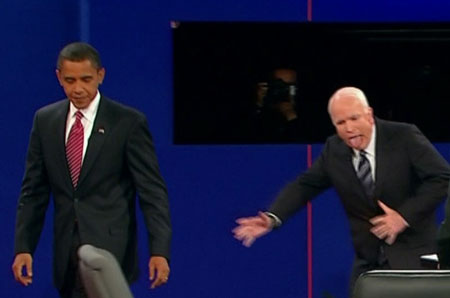
McCain Drops Patraeus Obsession to Focus on Joe the Plumber


Senator John McCain went into tonight's third and final presidential debate with a new game plan. He would be meaner, more bitter, more petulant, and more prone to fake outrage. This plan, he hoped, would be enough to revive his fading campaign. But in case it wasn't, he had a secret weapon—a weapon named Joe.

The debate confused the aliens from a distant solar system who, three weeks ago, figured out how to decode our Satellite TV and translate English. After studying the first two presidential face-offs, they'd concluded that General David Petraeus was one of the most influential figures on the planet.

Based on the pale, wrinkled organism's constant references, they inferred that the American people held the good General in an affection usually reserved for the likes of Jesus Christ, William Shakespeare, Albert Einstein or Harrison Ford. "Obama insulted General Petraeus by opposing the surge—which is much worse than supporting a disastrous war that cost us the lives of brave young men and helped put the country in financial ruin. General Petraeus thinks that Obama's an inexperienced sissy," said McCain's extraterrestrial translators.

Yet there was no mention of Petraeus in the final debate. Instead, McCain spent most of his time addressing one single person, Joe "The Plumber" Wurzelbacher. At this point, the alien leader said, "Fuck it. Let's get caught up on 'Lost'."

In a recent campaign event in Toledo, Ohio, Joe the Plumber asked Senator Barack Obama why the small business that he hypothetically might buy and that hypothetically might make slightly more than $250,000 a year would see a minor tax increase under his plan. As seen on video, The Big O articulately explained to Joe the Plumber that only his hypothetical income above $250,000 would hypothetically be taxed at a higher rate. He also used the phrase "spread the wealth around," which is code for either "turn the country into a Communist dictatorship" or "leave the middle-class with enough money to afford services like plumbing. Joe the Plumber replied that he worked hard, and shouldn't be punished for his hard work. He works hard.

The Big O thought that those five minutes were the end of his conversation with this McCain supporter posing as an undecided voter, but it turned out he had about 90 more. McCain had big plans for this man whom Obama would tax an extra $0 to $900 a year (not counting other deductions built into The Big O's plan), depending on where he fell in his possible income range of $250-280K a year.

McCain has a knack for leaching onto something and harping on it so insistently as to become a parody of himself. He did it with Petraeus, the Chicago Planetarium's projector and anything else remotely resembling an earmark. Now it was Joe's turn. McCain awkwardly attempted to turn Joe the Plumber into an average Joe with an above-average income, an everyman whom Obama wants to tax to death. McCain began nearly every response with phrases like "My old buddy Joe—Joe the Plumber—is out there…" before launching into rambles on healthcare, taxes, or whatever else came up.

It was inevitable that Joe the Plumber would be the hot target of the media's post-debate coverage, and Joe turned out to be a ready and willing interviewee. On CBS, he revealed that, while he may be an everyman who doesn't get the fancy GOP talking-point memos, he can pick things up quick. "Sure, I've heard nothing but Barack-this and Obama-that for the past 200 years of this god-forsaken, everlasting election cycle," he seemed to say, "but I just don't know enough about him. He's a mystery wrapped in a riddle inside an enigma! McCain on the other hand—I know where he stands. He stands against quality educational facilities like planetariums. He stands for expensive wars, under-qualified running mates and any strategy that might boost his sinking poll numbers. But perhaps most importantly, he stands with the good General Petraeus."
Crossposted at Daily Kos.
bxAv110 bxAv110 bxAv110

Monday, September 29, 2008

What I've been doing


Many have been wondering why I haven't been posting. Well, I've been working on recording some delectable, popadelic, hauntingly poetic indie-pop to bop your head and drink away your sorrows to. Check out the NSPS Facebook page.
bxAv110 bxAv110 bxAv110

Tuesday, August 12, 2008

Craig Froehlich: 1971-2008


If ever a situation required a laugh, Craig Froehlich was the man to provide it. Whether he was addressing a calamity of international proportions, celebrity news fodder or a personality that was at-odds with his own, Craig cut it down to its essence with his acerbic wit and insight. Whenever I hear something that makes me throw my arms in the air in disbelief, I think "I can't wait to hear what Craig has to say about this!"

As long as the world spins on with its foibles, ironies and outrages, that thought will no doubt reverberate in my head. But it breaks my heart that I will no longer have the pleasure of finding out. Craig died Monday morning after a long battle against alcoholism and depression. He left behind many devastated friends and family members who still remember him in his most happy and inspired moments. They include sister Carmen Watkins and her three daughters, brother Kevin Froehlich, mother Gertrud Anderson and father Darryl Froehlich.

Craig moved to Salt Lake City from Detroit in 1994, and completed his BA in Mass Communications at the University of Utah in 2002. We met when he came to the Daily Utah Chronicle and RED Magazine to pursue his love of writing. There, I had the pleasure of working with him and reading his material on a regular basis.

Craig was a ferocious reader, a lover of literature, history, humor, music and film. It was rare to find a topic on which he wasn't knowledgeable, and rarer still to find one from which he couldn't yank laughs. His drive to know everything spilled into his writing. Even the breeziest of his comedic gems entailed a great deal of research—he wanted to know his target before he lambasted it, to ensure his jokes were spot on.

Once, when I was his editor at the University of Utah's RED Magazine, he called a local burger joint near campus because he wanted to make a joke about the "World-Famous Pastrami Burger" sign outside their restaurant. Nevermind that his piece was about John Kerry, he needed to make sure he quoted the sign correctly. Unfortunately, the employee who worked there wasn't so aware of his surroundings, and didn't even know the sign even existed. Much to Craig's dismay, the minimum-wage-earning mope wouldn't go outside and check, and since we were on deadline, we couldn't check it ourselves. I suggested an alternative to the gag, but he remained bemused that this employee wouldn't aid his mischievous comedic scheme.


I've been going over the writing Craig left behind since receiving the news, and reading it is the best way to lift my spirits after. It doesn't replace having him here in person—the charming banter, the off-the-cuff remarks so clever you're not sure you really heard them, the hilarious storytelling and excited declarations—but it certainly reminds us of his unmistakable spirit. He was able to find the perfect way to cut down his subject with the wrong end of his axe, whether commenting on the shortcomings of ethnic nomenclature ("Many blacks feel far more American than African. Many whites have no idea what "Caucasian" means and refuse to be called European Americans for fear their women will stop shaving their armpits."), Republican political strategy ("God, Guns and Gays—or more specifically, threatening the latter with the first two.") or tourist souvenirs ("Sea turtles swaggered through town in flashy clothing and demanded money from helpless artisans and shopkeepers. To combat this menace, a Mexican freedom fighter known only as Señor Frog built countless resort hotels on Cancun’s immaculate stretch of beaches. These hotels decimated the habitat where the turtles laid their fragile eggs. Fertile turtles of yesterday now face extinction (a serious blow to their intimidation factor). Many of Cancun’s grandest shot glasses and T-shirts now bear the name of the heroic frog.").


Craig wouldn't abide sugar-coating—he avoided sentimentality and never hesitated to tell friends—or complete strangers—exactly what was on his mind. When people were building Miis at a Wii party, he took pleasure in pointing out when people were selecting features they wish they had, rather than ones that resembled their real-life looks. Of course, no one could accuse him of hypocrisy after seeing the comically sad little avatar he cooked up.

Once, I took him to an emergency room to receive treatment for a kidney stone that would not pass. His extreme pain combined with the tedious banter of the people sitting near us and, of course, his own personality to generate a reaction I'll never forget. As the man talked nonsense about celebrities, gun laws and stem-cell research, Craig cut him off. "Oh, will you shut the hell up!" he snapped, adding a disgruntled "PLEASE!" after seeing the unimpressed expression on the offender's face.

As his incessant banter suggested, the talking man wasn't as frightened of a confrontation as me, the silent fellow sinking in his seat. "If you don't like it, go somewhere else," he replied. While Craig mercifully relented from pushing the point further and apologized, he later mused about where he was supposed to go. "I'm in a freaking emergency room, for crying out loud." The detail he most ardently brought up, however, was that he did, after all, say please.

While Craig's social form may have been a bit unconventional, it let you know that he was never blowing smoke up your ass. If he asked about how something was going or how people were doing, you knew it was because he really cared.

So I can't sugar-coat this memorial, lest I hear him say, "You've gotta be kidding me!" in my head. The last several years of his life saw his addiction to alcohol grow worse and worse, and we saw less and less of the Craig we know and love. There was only so much time his loved ones could devote to enacting a recovery before becoming frustrated and exhausted. But even when he was sick in the hospital and experiencing great pain, he still took the time to ask about how everyone was doing, and tell some jokes to put our sad selves at ease.


Like most people who see the absurdities of the world in a special way, Craig was frustrated that others couldn't see them so easily. He loved his country, and his planet, but was continually upset that neither were as perfect as they should be. And while he never reached the levels he aspired to in life, he left us with a tremendous collection of work that makes us laugh while we shake our heads at how ridiculous it all is.

Below are links to some of Craig's best writing. Please share your own memories and thoughts on Craig in the comments section. This is a very sad moment, but Craig would be displeased if we didn't spend it laughing.

RED Through the Ages. To kick off the school year in Fall 2003, Craig wrote this introduction to RED Magazine. Sending up more than 100 years of history through the eyes of imagined college A&E publications. "1912—The Titanic sinks with 1,500 souls on board. 'It would make a smashing moving-picture show,' the editor of The Ute Artful Dodger muses, 'if only one could seamlessly write the gratuitous display of boobs into the story.'"

Façade: Interactive Videogames Take a Small Step Forward. A Review of an ambitious, but buggy-as-hell artificial intelligence game (or interactive drama). "If you want to shoot people or baskets, chances are you can find a video game that satiates your needs. If you want interaction and a chance to express personality and intellect, chances are you’ll need to stoop to speaking to other Homo sapiens."

Will Joke For Food. Craig profiles the hardships of local standup comedians for Salt Lake City Weekly. "Being a professional comedian requires compromises and obedience to the gods of income. Decisions to wring a living out of making people laugh demands diligence and a smidgen of insanity. A hard-working comedian can still skirt the poverty level, but it’s a world where only bad timing, horrible pay and a Klan rally discourages a comic from accepting a gig."

The Salt Shaker's 1977 Star Wars review. In honor of the prequel trilogy, Craig wrote this "archival review" of the original "Star Wars"—a 1977 article by "Anakin Mathews." It ran in our inaugural issue. "With or without the wars, Hamill’s star is definitely on the rise."

RED Magazine's endorsement of John Kerry. Note that because Craig couldn't get confirmation on B & D Burgers' world famous pastrami sign before deadline, he had to settle for the Training Table's claim to world-famous cheese fries. He always regretted the compromise and remained convinced that the B & D pastrami burger would have resulted in a funnier gag.

Christ and Comic Books on Main Street of SLC. Craig wonders if Chick Tracts will be distributed in downtown Salt Lake City. "Approach your stroll through the Main Street "Free-Speech-O-Rama" Plaza as would a cultural anthropologist. Observe outsiders with attentive impartiality and read comic books with the utmost caution. Those booklets are designed to convert unsuspecting sinners after only one reading."

The Best Film Fest in the West. Craig's send-up of the Sundance Film Festival was so funny, I ran it during two different festivals. "Sundance is devoid of the pretensions and exclusivity of other festivals. Any moron can get a ticket, and they do so in droves."

The Original Draft of the Bill of Rights. "Excessive bail shall not be required although every bail is excessive when you’re poor; nor cruel and unusual punishments inflicted such as eating Pop-Tarts in front of a hungry person or dressing up like a pirate and pelting someone with stale pancakes."

In Memoriam: Richard Pryor. Craig looks back on the life of one of his heroes.

The Top News Stories of 2005. Craig's last published work. "President Bush, since he has always held the media in such high esteem, believed that the Big Easy had truly dodged a bullet. He continued a well-deserved 27th vacation at his Crawford, Texas ranch—riding bikes, clearing brush and barbecuin’ up some of that tasty "pork" imported from Guantanamo Bay."
bxAv110 bxAv110 bxAv110

Sunday, July 13, 2008

SFSFF: Stephen Horne Brings Kinugasa to Life


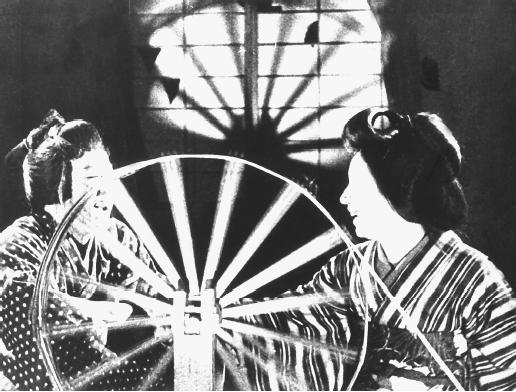
Pianist and silent film accompanist Stephen Horne just electrified the Castro Theatre with a stunning performance that glorified a gorgeous 35-mm print of Teinosuke Kinugasa's "Jujiro" ("Crossways"). He captured the film's mesmerizing, experimental visual language and draining emotional content. The score incorporated flute and other sounds to great effect, and ended in an exhausted, emotional entanglement.

Prior to the feature, Horne accompanied an early experimental color short from the Kodak labs called "Kaleidoscope," which was a perfect prelude, as the performance reflected the film's building blends of shapes, colors and light (I know, it sounds like one of George Lucas's upcoming projects).

There have been a lot of fine performances by orchestras, oranists, quartets and pianists at the San Francisco Silent Film Festival this year, but this one (Horne's third), I'll never forget.
bxAv110 bxAv110 bxAv110